Last updated October 15, 2026
The Complete Guide to ADU in Austin
Austin’s 2023 HOME initiative unlocked ADU rights for tens of thousands of properties that were previously ineligible, yet most homeowners still don’t know whether their specific lot qualifies before they spend $500 on a feasibility call. This guide walks you through the exact sequence of decisions from lot eligibility through move-in day, so nothing blindsides your family mid-project. We’ve seen too many Austin homeowners lose months and thousands of dollars because they designed an ADU before checking the zoning map, or financed a build before understanding Travis County’s property tax treatment of detached units. By the end of this guide, you’ll know precisely what to check, in what order, and what it should cost before you ever pick up the phone.
Quick Answer
Building an ADU in Austin typically costs between $180,000 and $420,000 for a 400 to 1,200 square foot unit, takes 9 to 16 months from first call to certificate of occupancy, and requires your lot to meet specific zoning, setback, and coverage rules that changed significantly under Austin’s HOME initiative. The homeowners who finish on budget are the ones who run a free lot-eligibility check on Austin’s Zoning Map, understand their financing before design begins, and get a written price before any work starts.
Table of Contents
- How to Check Your Lot’s ADU Eligibility in Austin for Free
- The Four Decision Gates: Zoning, Utilities, Financing, Design
- Detached, Attached, and Interior ADUs: What They Mean for Your Taxes and Rental Income
- The Realistic Austin ADU Timeline: Month by Month
- Why Written Pricing Before Design Lock-In Matters More Than Any Warranty
- A Realistic Cost Breakdown for an Austin ADU
- Common Mistakes to Avoid
- When to Call a Professional
- Frequently Asked Questions
- The Bottom Line
How to Check Your Lot’s ADU Eligibility in Austin for Free
Before you spend a dollar on a feasibility study or a contractor consultation, you can check your property’s ADU eligibility yourself using Austin’s public Zoning Map. The map is hosted by the City of Austin and takes about fifteen minutes to use. You’ll need your address and a basic understanding of your lot’s zoning designation, which the map will show you directly. Most single-family lots in Austin are zoned SF-1, SF-2, or SF-3, and the HOME initiative relaxed ADU rules across all three, but the specifics vary by zone.
Here’s the step-by-step process we walk our clients through before anyone signs anything:
- Open Austin’s Zoning Map online. The city maintains a searchable map at austintexas.gov. Type in your address and note the zoning code that appears for your parcel.
- Confirm your lot is in a single-family zoning district. ADUs are allowed in SF-1, SF-2, and SF-3 zones under the HOME initiative. If your lot is zoned multifamily or commercial, different rules apply.
- Check your lot’s minimum size. Under current Austin rules, most single-family lots can accommodate an ADU if the lot is at least 5,750 square feet, but smaller lots may qualify through the HOME initiative’s reduced minimums. The Zoning Map will show your lot’s square footage.
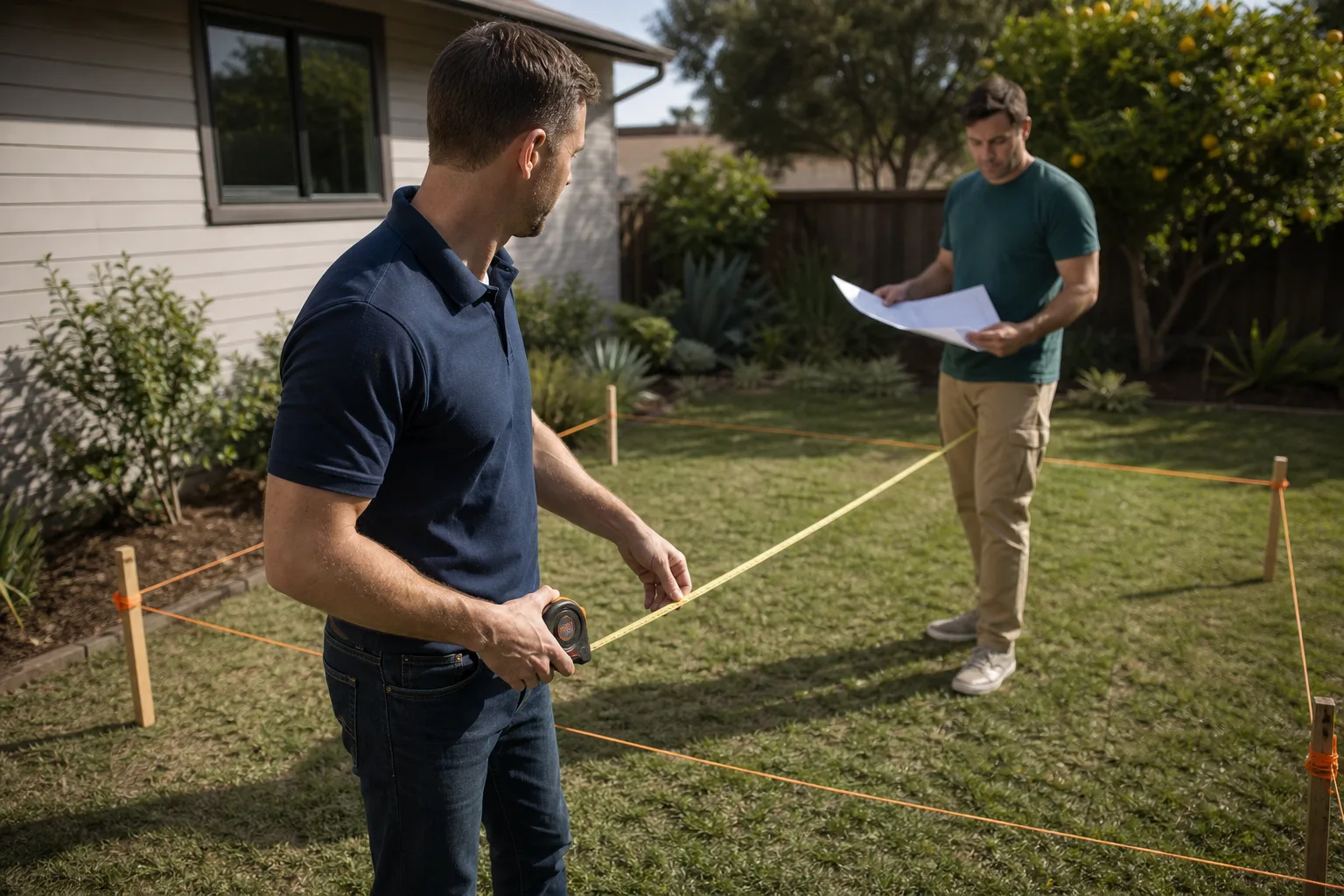
- Review setback requirements. Austin’s HOME initiative reduced rear and side setbacks for ADUs on many lots, but you’ll still need to confirm your specific parcel’s requirements. The map’s parcel viewer will show your property lines, which helps you sketch where an ADU would sit.
- Look at your lot’s impervious cover limits. Austin caps how much of your lot can be covered by structures and pavement. Adding an ADU increases impervious cover, so if your main house already sits near the cap, you may need to remove pavement or adjust your ADU footprint.
If you’d rather not navigate the map alone, a good ADU builder will run this check with you during a free consultation and explain what your specific lot can and cannot accommodate. At Seedling ADU Austin, we do this before we ever talk pricing, because there’s no point pricing a project that the zoning map won’t allow.
The Four Decision Gates: Zoning, Utilities, Financing, Design
Most Austin ADU projects stall because homeowners skip a gate. They fall in love with a design before they check utilities. Or they secure financing before they understand what the property tax reassessment will do to their monthly budget. The sequence matters, and skipping any single gate adds months to a project.
Gate 1: Zoning
We covered lot eligibility above, but zoning is more than a pass/fail check. It determines your ADU’s maximum square footage, its height limit, its setback from the property line, and whether you can build a detached unit or must attach to the existing house. In Austin’s older neighborhoods like Bouldin Creek, Travis Heights, and Hyde Park, setback rules and lot coverage limits often force a smaller ADU footprint than homeowners expect. In newer developments like Mueller or East Austin’s rebuilt lots, the rules are often more forgiving. Run this gate first, always.
Gate 2: Utilities
An ADU needs water, sewer, and electricity. Austin Water requires a separate water meter for detached ADUs in most cases, which means tapping the city main and running a new service line. Austin Energy requires a separate electrical service, which can trigger a panel upgrade on the main house if your existing panel is near capacity. If your lot sits in a part of Austin with older sewer laterals, you may need to replace the line from the main house to the street before the city will sign off on the ADU connection. We’ve seen utility work add $15,000 to $40,000 to a project that looked straightforward on paper.
Gate 3: Financing
Most Austin homeowners finance an ADU through a home equity loan, a home equity line of credit, a cash-out refinance, or cash. Each has different implications for your monthly payment and your long-term equity position. What many families overlook is that the ADU’s construction cost is not the only number that matters. You’ll also pay for permits, utility connections, architectural drawings, and in Travis County, a higher property tax bill once the ADU is complete. We recommend running the full projected monthly cost, including the new tax assessment, before you commit to a design.
Gate 4: Design
Only after zoning, utilities, and financing are clear should you start talking design. This is the stage where you choose between a site-built ADU and a prefab unit from a brand like Abodu, Cover, or Dvele. Each has different lead times, foundation requirements, and cost structures. We’ll explore those differences later, but the key point here is order: design comes last, not first.
Detached, Attached, and Interior ADUs: What They Mean for Your Taxes and Rental Income
Austin classifies ADUs into three types, and the distinction affects your property taxes, your rental income potential, and your construction costs. Understanding these classifications before you design anything will save you from a costly correction later.
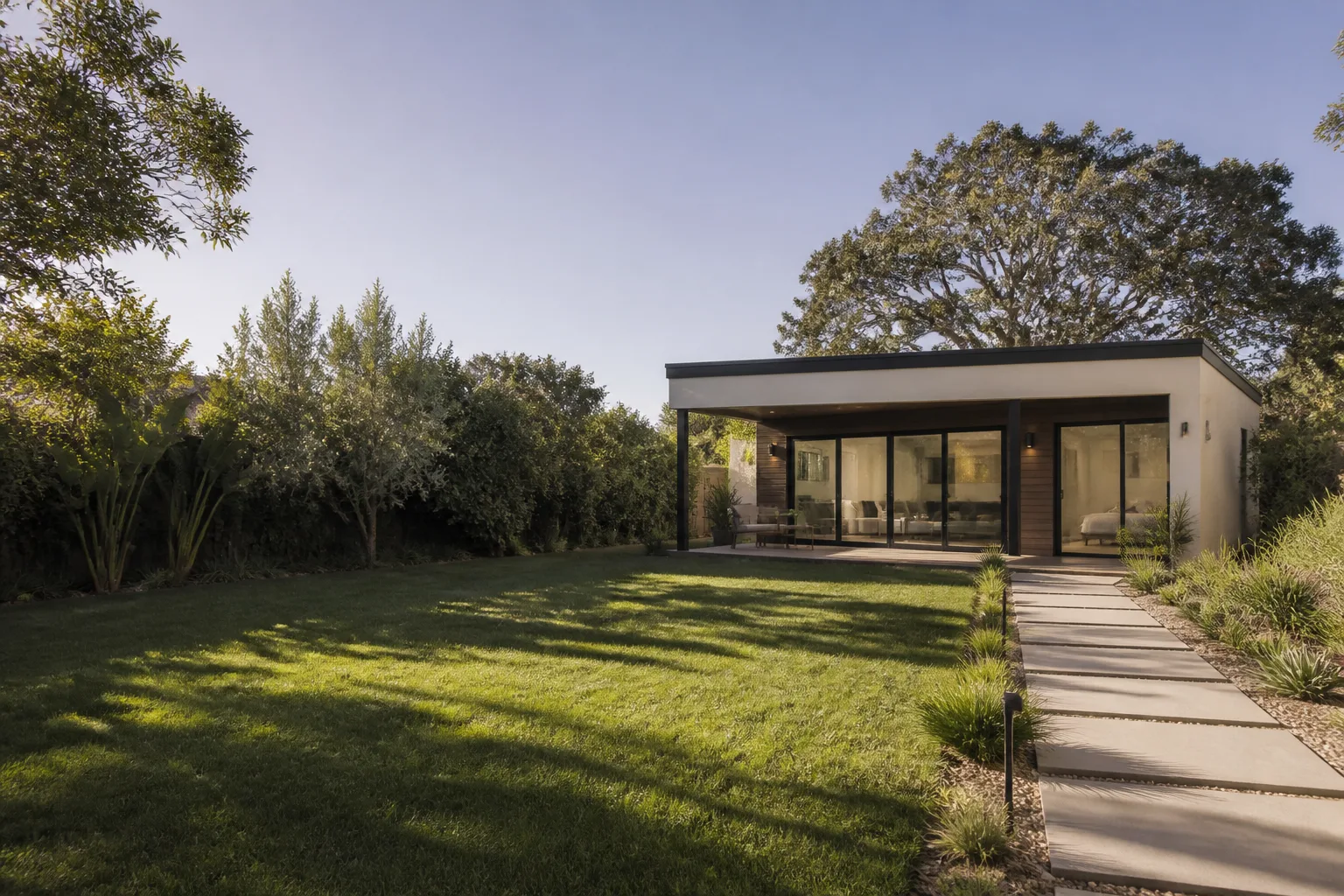
- Detached ADU: A standalone structure, typically 400 to 1,100 square feet, built in the backyard. Detached ADUs in Austin generally cost $280 to $420 per square foot to build, depending on finish level and site conditions. They offer the most rental privacy and the highest rental rates, but they trigger the largest property tax reassessment because Travis County treats them as new living area.
- Attached ADU: An addition to the existing house with a separate entrance, kitchen, and bathroom. Attached ADUs cost slightly less per square foot than detached units because they share at least one wall and often share utility connections. They may result in a lower tax increase than a detached unit, depending on how Travis County assesses the improvement.
- Interior ADU: A conversion of existing interior space, such as a basement, attic, or attached garage, into a separate living unit. Interior ADUs are often the least expensive route because the shell already exists, but they can trigger code requirements for egress windows, ceiling height, and fire separation that add cost. In Austin, interior ADUs are increasingly popular in older homes where garage conversions make better use of existing square footage.
For rental income planning, detached ADUs in central Austin neighborhoods like Zilker, Allandale, and Crestview typically rent for $1,800 to $2,600 per month for a one-bedroom unit. Attached and interior units rent for slightly less, usually $1,400 to $2,200, because they share walls with the primary residence. These figures matter when you’re calculating whether the ADU’s rental income covers the financing cost.
The Realistic Austin ADU Timeline: Month by Month
Any contractor who tells you an ADU in Austin takes “six to twelve months” is giving you a range too wide to plan around. Here’s the month-by-month reality we see on projects across Austin, from Hyde Park to Circle C Ranch.
- Month 1: Feasibility and site assessment. Zoning check, utility review, site measurements, and a realistic budget conversation. During this month, you should receive a written price range for your project, not a vague estimate.
- Month 2: Design agreement and preliminary drawings. Whether you choose a site-built design or a prefab unit from Abodu or Cover, this month is about locking the floor plan, the ADU’s position on the lot, and the interior finish level.
- Month 3: Permit drawings and submission. Your builder or architect prepares the drawings Austin’s Development Services Department requires. Austin’s permit review can take 4 to 8 weeks for an ADU, but a complete submission shortens the wait.
- Month 4: Permit review and revisions. Austin’s reviewers may request changes. The faster your builder responds, the sooner the permit clears. This is where a builder who knows Austin’s code specifics saves you weeks.
- Month 5: Utility approvals and foundation work. Austin Water and Austin Energy sign-offs happen here, along with the ADU’s foundation. In Austin’s expansive clay soils, foundation design matters more than most homeowners realize.
- Month 6-9: Framing, rough-in, and inspections. The structure goes up, plumbing and electrical rough-in happens, and city inspectors visit multiple times. Prefab units often compress this window by several weeks because the modules are built off-site while site work proceeds.
- Month 10-12: Interior finishes and final inspections. Drywall, flooring, cabinets, fixtures, and paint. Austin’s final inspections include building, electrical, plumbing, and mechanical checks.
- Month 13-16: Certificate of occupancy. The city issues the CO, and your ADU is legally rentable or liveable. Every project is different, but this is the honest range: 13 to 16 months for site-built, 9 to 12 months for many prefab units.
Why Written Pricing Before Design Lock-In Matters More Than Any Warranty
A warranty tells you what happens if the work fails. A written price tells you what the work will cost before it begins. In our experience, the second document protects an Austin family far more than the first. Here’s the uncomfortable truth about ADU pricing: many builders will give you a verbal estimate, then present a higher number once the design is locked and you’ve invested in drawings. At that point, you’re too far in to walk away. A written price, delivered before design lock-in, changes the power dynamic. It means your builder has committed to a number, and any changes after that point are deliberate decisions, not surprises.
At Seedling ADU Austin, every project receives a written price before any work starts. That price includes the full scope: permits, utility connections, materials, labor, and finish allowances. If something changes during the build that affects cost, we document it in writing before proceeding. This is not a sales tactic. It’s the only honest way to build a $300,000 structure on a family’s property. When you call builders, ask this question first: “Will you give me a written price before I sign a design agreement?” The answer will tell you everything you need to know.
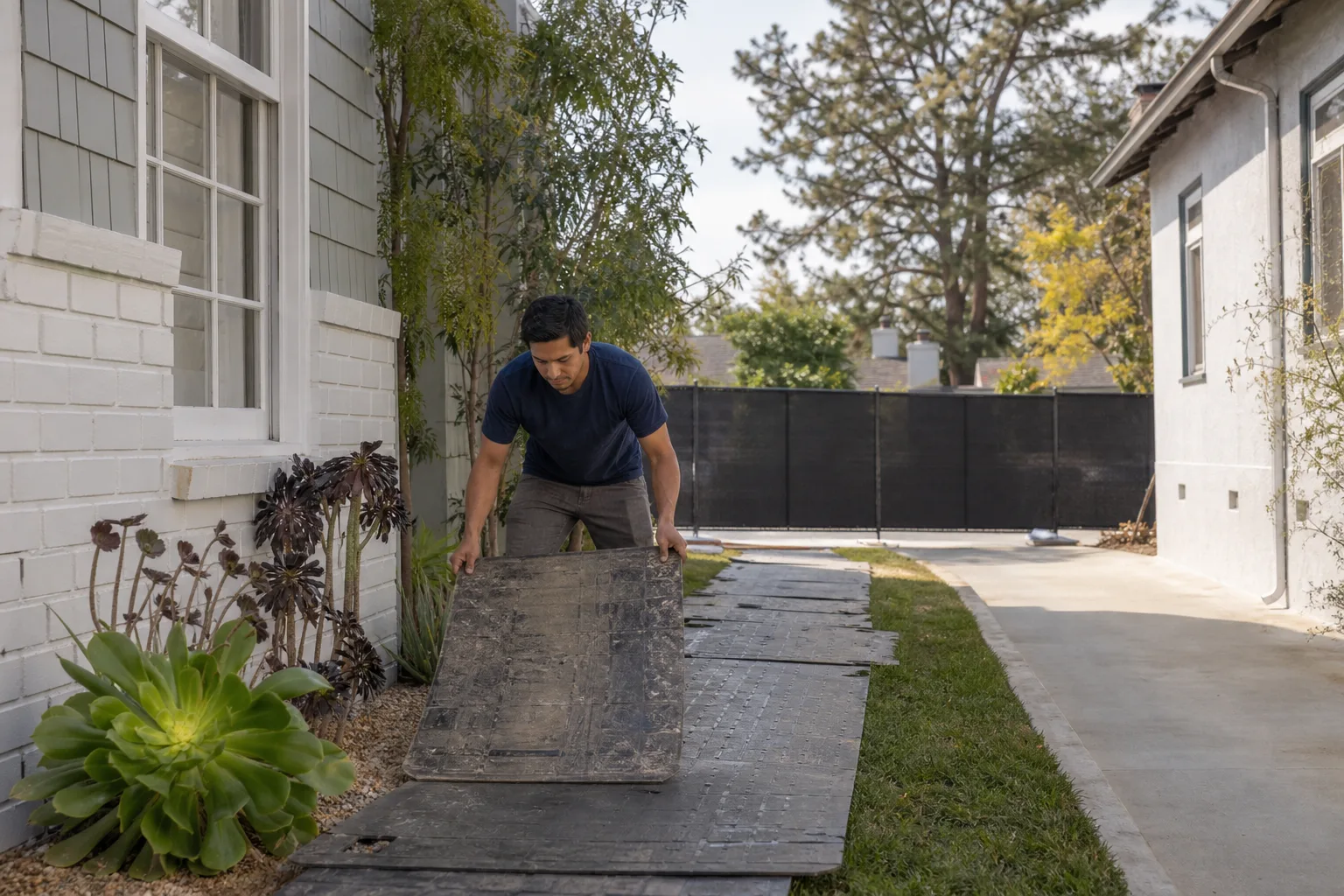
For families adding an ADU to their property, the process is the product. If the crew shows up late, leaves debris in the yard, and can’t answer a question about the plumbing rough-in, the finished ADU won’t undo that stress. This is why we hold every crew to the Cedarwell Care Promise: shoe covers and drop cloths inside the home, pet-safe products where there is a choice, a photo of the clean-up before the crew leaves, and a live person available by phone 24/7. Building an ADU is a long project. The daily experience matters as much as the final certificate of occupancy.
A Realistic Cost Breakdown for an Austin ADU
Austin ADU costs break down into predictable line items. Here’s what families should expect to see in a written bid, based on current market pricing in Austin and Travis County:
- Site preparation and foundation: $18,000 to $45,000. Austin’s clay soils often require pier-and-beam or reinforced slab foundations, and older lots may need tree protection or grading work.
- Permits and city fees: $6,000 to $15,000. Austin’s Development Services Department charges plan review fees, permit fees, and utility connection fees. A complete, accurate submission minimizes resubmission costs.
- Utility connections: $8,000 to $25,000. Separate water meter, sewer tap, and electrical service. If your main house panel needs an upgrade, add $3,000 to $6,000.
- Structure and shell: $90,000 to $180,000. For site-built, this covers framing, roofing, siding, windows, and insulation. Prefab units from Abodu or Cover often bundle this into the unit price, but site work and foundation are separate.
- Interior finishes: $40,000 to $100,000. Flooring, drywall, paint, cabinets, countertops, bathroom fixtures, and appliances. This is the line item where families either save or overspend, depending on finish level.
- Mechanical systems: $15,000 to $35,000. Mini-split HVAC, water heater, and electrical panel. Austin’s hot summers make a properly sized mini-split essential, not optional.
- Landscaping and site restoration: $3,000 to $12,000. Grading, drainage, and restoring the yard after construction. This line item is often missing from initial estimates, so check for it.
Total realistic range for a 600 to 800 square foot ADU in Austin: $180,000 to $420,000, with most families landing between $220,000 and $320,000. Prefab units from Dvele or Cover typically reduce site time but not total cost, since factory-built quality carries a price premium that offsets construction-time savings. The best way to get an accurate number for your specific lot is to ask for a written price, not a per-square-foot guess.
Common Mistakes to Avoid
- Checking design before zoning. Families fall in love with a floor plan, then discover their lot’s setback rules won’t allow the unit where they wanted it. Run the free zoning check first.
- Underestimating utility connection costs. A separate water meter and sewer tap in Austin can run $15,000 to $25,000 before you’ve built a single wall. Get these numbers in writing early.
- Ignoring the property tax reassessment. Travis County will reassess your property once the ADU is complete. A $250,000 ADU can add $4,000 to $6,000 per year to your property tax bill. Factor this into your rental income math.
- Skipping a written price before design. Verbal estimates are not commitments. If your builder won’t put the number in writing before you sign a design agreement, keep looking.
- Choosing the wrong ADU classification for your goals. A detached unit maximizes rental income but triggers a larger tax increase. An attached or interior unit costs less but rents for less. Match the classification to your long-term plan.
- Hiring a generalist instead of an ADU specialist. Austin’s ADU code is specific and changing. A builder who primarily does kitchen remodels may not know the HOME initiative’s setback reductions or utility metering rules. Ask how many ADUs they’ve completed in Austin specifically.
- Not accounting for Austin’s climate in material choices. Austin summers demand real insulation and properly sized HVAC. Choosing cheap windows or undersized mini-splits means a unit that’s uncomfortable in July and expensive to cool.
When to Call a Professional
You should call an ADU builder after you’ve run the free zoning check and confirmed your lot is likely eligible, but before you’ve committed to a design or spent money on drawings. This is the moment when a builder can verify your zoning findings, assess utility connection requirements, and give you a realistic written price range. Specific scenarios where professional help is essential: your lot is smaller than 5,750 square feet, your main house sits near the impervious cover cap, your electrical panel is older than 20 years, or you’re considering a prefab unit and need help comparing Abodu, Cover, and Dvele options for your specific site. Seedling ADU Austin offers free estimates in Austin; call (254) 615-3842 to schedule a site walkthrough and written price conversation.
Frequently Asked Questions
An ADU in Austin typically costs between $180,000 and $420,000, depending on size, classification, finish level, and site conditions. For more guides & resources on budgeting and planning, visit our blog. Most families building a 600 to 800 square foot unit spend between $220,000 and $320,000. Call (254) 615-3842 for a written price on your specific project.
Most single-family lots in Austin are eligible for an ADU under the HOME initiative, but eligibility depends on your zoning district, lot size, setback requirements, and impervious cover limits. Run a free check on Austin’s Zoning Map, or call us for a no-cost eligibility review.
A site-built ADU in Austin typically takes 13 to 16 months from first call to certificate of occupancy. Prefab units from brands like Abodu or Cover often shorten the timeline to 9 to 12 months because modules are built off-site while site work proceeds.
Yes, Travis County will reassess your property once the ADU is complete, and a $250,000 ADU can add $4,000 to $6,000 per year to your property tax bill. A detached unit typically triggers a larger increase than an attached or interior conversion. Factor this into your rental income projections before you build.
Yes, Austin allows ADUs to be rented as long-term housing. Short-term rentals under 30 days face additional restrictions and registration requirements with the City of Austin. Most families building ADUs in Austin plan for long-term tenants, with central neighborhoods like Zilker and Allandale commanding $1,800 to $2,600 per month for a one-bedroom detached unit.
In most cases, yes. Austin Water requires a separate water meter for detached ADUs, which means tapping the city main and running a new service line. This typically costs $8,000 to $15,000. Attached and interior ADUs may share the main house’s meter if the plumbing is connected properly, but Austin Water makes this determination during permit review.
The Bottom Line
Building an ADU in Austin is a sequence of decisions, and the homeowners who succeed are the ones who respect the order: zoning first, utilities second, financing third, design fourth. Run the free lot-eligibility check before you spend a dollar. Understand that your ADU classification affects both your construction cost and your property tax bill. Insist on a written price before you lock in a design. And choose a builder who will protect your home during the build as carefully as they build the ADU itself. If you’re ready to start, Seedling ADU Austin offers free estimates and written pricing on every project. Call (254) 615-3842 to begin your lot review.
Written by Ben Ortega, Owner at Seedling ADU Austin, serving Austin since 2001.