Last updated October 15, 2026
How to Hire a ADU Contractor in Austin: A Step-by-Step Guide
Of the contractors who will respond to an Austin ADU inquiry this week, a significant share have never pulled a residential addition permit in Travis County. They’re framing crews who upsized their scope when the market shifted, not ADU specialists. That single fact explains most of the cost overruns, schedule slips, and half-finished backyard projects in Austin today. This guide-along with our more guides & resources-flips the hiring process on its head: track record first, price second. By the time you read the last section, you’ll know exactly how to verify a contractor’s permit history, which contract clauses protect you, and why three bids are often less useful than one detailed bid plus the right questions.
Quick Answer
To hire an ADU contractor in Austin, start by verifying that the contractor has closed permitted accessory dwelling unit projects in Travis County through the city’s public permit portal, then request one detailed written bid rather than collecting three vague estimates. Require a contract with scope-lock language, written pricing before work begins, a named certificate of occupancy responsible party, and a warranty trigger date tied to the CO. Seedling ADU Austin provides a written price before any work starts and backs every ADU, garage conversion, and home addition with a 365-Day Done Right Promise.
Table of Contents
- Step 1: Verify the Contractor’s Closed Permit History in Travis County
- Step 2: Request One Detailed Bid, Not Three Vague Ones
- Step 3: Demand These Five Contract Clauses
- Step 4: Structure a Payment Schedule That Protects You
- Step 5: Recognize Austin-Specific Red Flags
- Step 6: Decide Between Site-Built, Prefab, and Panelized ADUs
- Step 7: Know What to Expect During the Build
Step 1: Verify the Contractor’s Closed Permit History in Travis County
Austin’s permit portal is public, searchable, and brutally honest. Any contractor can pull a permit. The meaningful question is whether they have closed one. A closed permit means the work passed final inspection and the city issued a certificate of occupancy. An open permit on an ADU project is a loose thread that becomes your problem when you try to sell the property or refinance. In Travis County, you can search by contractor name, address, or permit number through the Austin Build + Connect portal, as covered in our ADU Permits, Codes & Inspections in TX: What You Need to Know. Look for ADU-specific permits, not just residential additions. A detached 400-square-foot studio and a 1,200-square-foot attached addition are different animals. The contractor who has closed four ADUs in Crestview and Mueller has learned things about foundation constraints, tree ordinances, and setback requirements that a general remodeler never will.
Here’s the step-by-step verification process we recommend to every Austin homeowner before any price discussion:
- Go to the City of Austin’s Austin Build + Connect portal and search by the contractor’s business name.
- Filter for permits issued in the last five years with a project description containing “ADU,” “accessory dwelling,” or “garage conversion.”
- Check the permit status. “Issued” is not enough. Look for “Final” or “Completed” status, which means the final inspection passed and the permit closed.
- Note the addresses. Do they cluster in neighborhoods similar to yours? A contractor who builds ADUs in East Austin’s clay soil knows what that soil does to a slab in August.
- Call the homeowner reference if you can find one. Ask one question: “Did they close your permit on time, or are you still chasing them?”
If the contractor hesitates when you ask for permit numbers, or says permits are “handled by the homeowner,” that’s a signal. A real ADU contractor in Austin treats the permit as part of the deliverable. In our experience at Seedling ADU Austin, the families who contact us after a stalled project almost always describe a contractor who treated the permit like an afterthought.
Step 2: Request One Detailed Bid, Not Three Vague Ones
The three-bid advice works for a water heater. It fails for an ADU because no two ADU scopes are identical. One Austin contractor prices a foundation at 18 inches of pier depth; another prices 24 inches with grade beams. One includes the sewer lateral connection; another calls it an “allowance” and hopes you don’t notice. Comparing three vague bids side by side is like comparing the weight of fruit by looking at the bag. What you want is one bid detailed enough to audit line by line.
A detailed ADU bid in Austin should show:
- Square footage calculated from the actual architectural drawings, not “about 600 square feet.”
- Line items for site prep, foundation, framing, mechanical, electrical, plumbing, drywall, flooring, fixtures, paint, and landscaping repair.
- Specific fixture allowances: manufacturer names, model tiers, and exact dollar ceilings for each category. “TBD” is not a number.
- The permit fee line item with the actual City of Austin fee amount, not a rounded guess.
- Exclusions listed explicitly. If tree removal is not included, the bid says so in writing.
Seedling ADU Austin provides a written price before any work begins, with no surprise line items added after crews arrive. That’s not a marketing phrase; it’s a contract structure. When every line item is fixed in writing, there’s nowhere for an “unforeseen condition” to hide. Austin’s expansive clay soil does shift. A good bid accounts for that. A bad bid uses it as an invoice generator later.
Step 3: Demand These Five Contract Clauses
Most Austin ADU contracts are repurposed remodel agreements with a few extra pages stapled on. A professional ADU contract has five clauses that a standard remodel contract simply doesn’t. Before you sign anything, read for these five things:
- Scope-lock language. The contract must state that changes to the scope require a written change order signed by both parties before any additional work happens. This phrase blocks the most common ADU budget destroyer: the contractor who starts “upgrading” materials mid-build and invoices you later.
- Written pricing guarantee. The contract must tie the final price to the written bid, with the only allowed adjustments being change orders you signed or conditions no reasonable contractor could have foreseen (and even those require your written approval). If the contract says “final price to be determined as work progresses,” you’re not hiring a contractor; you’re writing a blank check.
- Certificate of occupancy responsibility. The contract must name the party responsible for obtaining the certificate of occupancy and list what happens if the CO is delayed. In Austin, an ADU without a CO is not a legal dwelling. The contract should state that the contractor pulls the permit, schedules the final inspection, and delivers the CO before demanding final payment.
- Warranty trigger date. The warranty must start on the date the certificate of occupancy is issued, not the date the contract is signed. A project that takes 14 months and a contract that says “one-year warranty from date of signature” leaves you with a warranty that expired before the paint dried. The 365-Day Done Right Promise at Seedling ADU Austin begins when the job is complete, not when the ink dries.
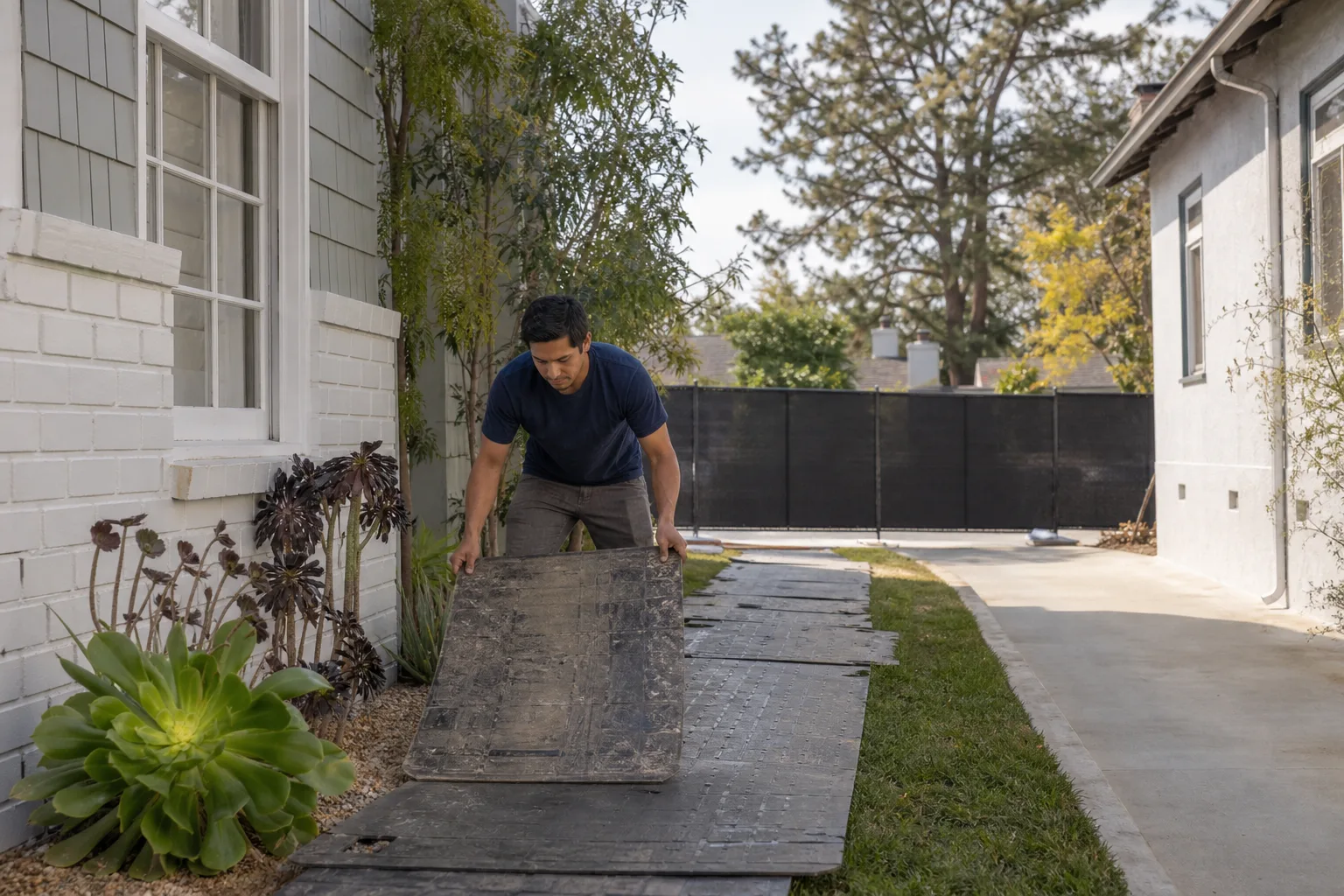
- Cleanup and site protection language. The contract must specify what the worksite looks like at the end of each workday: floors protected, walkways clear, debris removed, gates closed. Families with dogs and kids need this in writing, not as a verbal promise. Our crews arrive with shoe covers and drop cloths, and a photo of the clean-up is taken before the crew leaves every single day.
Step 4: Structure a Payment Schedule That Protects You
Payment schedules tell you more about a contractor than their website does. The order of milestones and the size of each draw reveal whether they’re financing your project on your money or theirs. In Austin’s ADU market, the fair schedule ties money to completed, inspectable work, not to signed paper or verbal progress reports.
A protective payment schedule looks like this:
- Deposit: 10 – 15% at contract signing. This covers permits, drawings, and scheduling. If a contractor asks for 30 – 50% down, they’re using your cash as working capital.
- Foundation and site work: 15 – 20% after the slab passes inspection. Not when the concrete is poured; when the city says it’s right.
- Framing and roof: 20 – 25% after the framing inspection and roof dry-in are complete. The structure should be weathertight before you release this draw.
- Mechanical, electrical, plumbing rough-in: 20% after the rough-in inspection passes. This is the single biggest milestone; don’t release it until the tray ceiling wires and PEX lines are blessed by the inspector.
- Drywall, fixtures, finishes: 15 – 20% as interior work completes, tied to visible completion of specified milestones in the contract.
- Final payment: 5 – 10% only after the certificate of occupancy is in your hand and the punch list is complete. No CO, no final check.
If a contractor suggests an even split across the timeline, or a schedule that front-loads more than 25 percent before any inspection passes, walk. In our experience in Austin, the contractors who finish projects are the ones whose cash flow depends on finishing, not on starting.
Step 5: Recognize Austin-Specific Red Flags
Austin’s ADU market has grown faster than its contractor base. Demand from the HOME Initiative and the new city code allowances has attracted builders who see ADUs as a faster path to revenue than kitchen remodels. Here are the red flags specific to this city’s market:
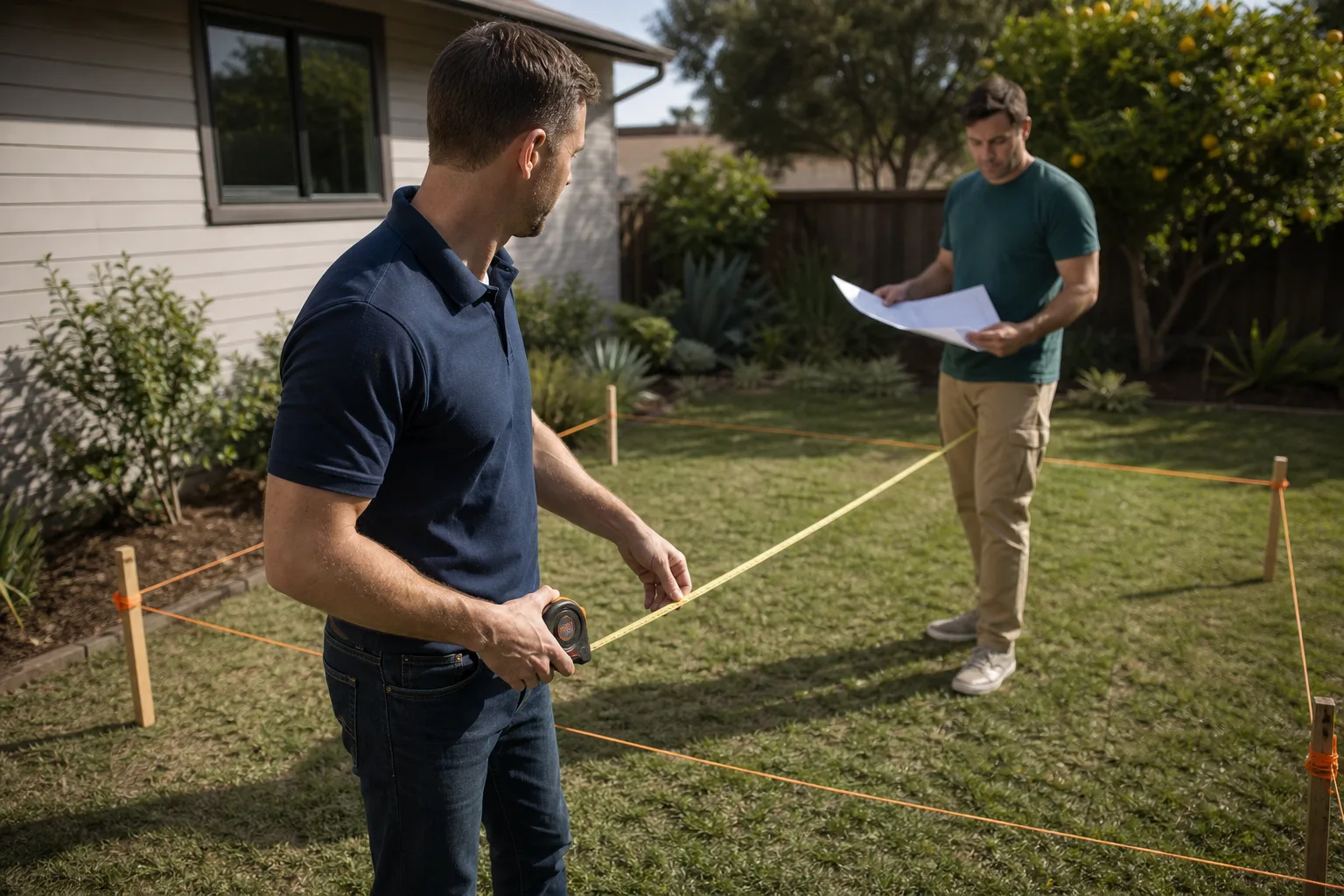
- A quote before measuring. If a contractor gives you a price over the phone without visiting the lot, measuring the setback, checking the tree canopy, or pulling the survey, they’re guessing. Austin’s tree ordinance alone can add thousands to a project. The Live Oak in the corner of your yard is protected. A contractor who quotes before stepping foot on the property hasn’t accounted for it.
- Inability to name their permit expediter. In Travis County, most professional ADU contractors work with a named permit expediter who knows the Austin Build + Connect system and the review timeline. If the contractor fumbles this question, permits are likely not a regular part of their workflow.
- “Allowances” for fixture categories. The word “allowance” in an Austin ADU bid is a placeholder for a future invoice. A $4,000 kitchen fixture allowance that becomes a $6,500 purchase is not a surprise to the contractor; it was the plan. Written pricing means the fixture tier is named and the ceiling is fixed.
- No mention of the Cedarwell Care Promise or equivalent protection language. If the contractor’s contract has no clause about protecting the inside of your home during the build, that’s a red flag. A 600-square-foot addition means crews walking through your laundry room, hallway, or side yard for months. Shoe covers, drop cloths, and daily cleanup are not extras; they’re the baseline for working around a family that’s still living in the house.
- A bid that’s 30% below the next closest. In Austin, underpricing is usually a sign that either the scope is thinner than the others, or the contractor plans to recover costs through change orders. ADU costs in this city have settled into predictable bands, and the extreme outlier is rarely a bargain.
Step 6: Decide Between Site-Built, Prefab, and Panelized ADUs
Before you hire an Austin ADU contractor, you need to know which construction method you’re hiring for. The three approaches have different permit paths, timelines, and budget profiles. Austin homeowners now have access to all three, and the right answer depends on your lot, your timeline, and how much disruption your family can tolerate.
Site-built ADUs are framed on your lot, stick by stick. This gives the most design flexibility and is often the right choice for tight lots with odd setbacks or protected trees that require custom foundation work. The tradeoff is time: site-built ADUs in Austin typically take 9 – 18 months from permit to CO, and the crew is on your property for most of that time-timing we break down season by season in our Seasonal ADU Care for Austin: Year-Round Homeowner’s Guide. For families with young kids, the daily presence of a framing crew, concrete trucks, and material deliveries is a real consideration.
Prefab and panelized ADUs are built in a factory and assembled on your lot. Brands like Cover, Dvele, and Mighty Buildings build panels or modules that arrive on a truck and are craned into position in days, not months. The foundation and utility connections still happen on-site, but the factory-built structure reduces on-site time dramatically. Families that choose this route often do so because they want to minimize the months of crew traffic through their side yard. Seedling ADU Austin works with these brands, along with Boxabl, because serious ADU buyers in Austin should be able to choose the right product for their lot, not just what a builder happens to prefer selling.
Hybrid approaches combine factory-built panels with site-built foundation and finish work. This is common in Austin because our clay soil requires specific foundation work that factory modules can’t solve, but the wall panels and roof trusses can still arrive pre-built. The right answer often emerges during the site assessment, which is why a detailed written bid should show the method and the reasoning behind it.
Step 7: Know What to Expect During the Build
An ADU is not a weekend project. Even a prefab unit assembled in a week still requires months of site prep, utility trenching, inspection scheduling, and interior finishing. Knowing what the daily reality looks like helps you choose a contractor who builds around your family instead of through it.
In Austin, the workday typically starts between 7:00 and 8:00 a.m. and ends between 4:00 and 6:00 p.m., Monday through Friday. The city’s noise ordinance allows construction between 7:00 a.m. and 10:00 p.m., but reputable crews in residential neighborhoods tend to stick to standard hours and avoid weekend hammering. If you have a child who naps, mention it. A crew that respects the family’s schedule will sequence noisy work like concrete cutting and nail gun work before the nap window, or schedule it for a day when the family is out. Our crews are trained to respect kids’ sleep schedules and pet safety as part of how we work inside a lived-in home.
Utility work is the least visible but most disruptive phase. Trenching for water, sewer, and electrical lines can cross your yard, your driveway, or your existing landscaping. Ask the contractor where the trenches will run and what the restoration plan is. Some Austin yards have irrigation lines and mature roots that need protection. A professional contractor walks the property with you before trenching starts and marks exactly what will be disturbed and what will be restored.
The inspections come in waves: foundation, framing, rough-in, insulation, and final. Each requires a city inspector to visit the site, which in Travis County can add days to the schedule. A contractor who has worked with Austin’s inspection office knows how to sequence work so that no inspection becomes a bottleneck. That’s part of the value of hiring a contractor with closed permits in the area; they know which inspectors check which details, and they build to pass the first time.
Throughout the build, the inside of your home should remain protected. The path from the front door to the backyard is a work corridor, and it needs drop cloths, shoe covers, and daily sweeping. If the contractor’s crew regularly leaves dirt in your hallway or mud on your porch, that’s not an inconvenience; it’s a signal about how they’ll treat the part of the project you can’t see. The Cedarwell Care Promise at Seedling ADU Austin exists because this is where trust is built or broken: shoe covers and drop cloths inside the home, pet-safe products where there is a choice, a photo of the clean-up before the crew leaves.
Common Mistakes to Avoid
- Hiring before verifying the permit history. The single most damaging mistake in Austin’s ADU market. An unpermitted or improperly permitted ADU can block a future sale and require demolition in the worst case. Verify closed permits before any price discussion.
- Collecting three vague bids instead of one detailed bid. Three vague numbers teach you nothing. One line-item bid from a contractor who has actually measured your lot tells you almost everything.
- Accepting “allowances” in the written scope. An allowance is a variable cost wearing a fixed-cost costume. Demand named brands, model tiers, and dollar ceilings in writing.
- Paying more than 15% before any inspection passes. Your leverage is tied to unpaid work. Front-loaded payment schedules transfer your leverage to the contractor before they’ve earned it.
- Signing a contract without a CO responsibility clause. In Austin, a certificate of occupancy is the only proof your ADU is legal to live in. If no one in the contract is accountable for delivering it, you’re the one accountable by default.
- Choosing a contractor who hasn’t built in your soil type. East Austin’s black clay, West Austin’s limestone, and the shifty loam near the river all behave differently under a slab. Closed permits in your specific neighborhood matter.
- Ignoring the day-to-day impact on your household. Months of work in your backyard means crew traffic, noise, and dirt. A contractor without a written protection plan for your floors and air quality is one you’ll regret hiring by week two.
When to Call a Professional
Any project that requires a permit, a foundation, and a certificate of occupancy is not a DIY project. In Austin, an ADU built without permits can trigger city action, insurance denial, and a buyer walkaway when you eventually sell. Call a professional when the project involves structural work, utility connections, tree protection, or anything that touches a legal dwelling classification. If you’re uncertain whether your project qualifies as an ADU or falls under a different residential category, a quick conversation can save you thousands. Seedling ADU Austin offers free estimates in Austin. Call (254) 615-3842 for a written price before any work begins.
Frequently Asked Questions
An ADU in Austin typically costs between $180,000 and $420,000 depending on the size, construction method, and site conditions. A prefab studio from a brand like Cover or Boxabl lands at the lower end, while a site-built two-bedroom ADU with a full kitchen and custom finishes pushes toward the upper end. Exact pricing depends on your lot’s soil, tree coverage, and utility access. Call (254) 615-3842 for a written line-item estimate; estimates are free.
Most ADU projects in Austin take 9 to 18 months from the day the permit application is submitted to the day the certificate of occupancy is issued. Prefab and panelized units from brands like Dvele or Mighty Buildings can shorten the on-site construction window to a few weeks, but site prep, permitting, and utility connections still consume months. Austin’s inspection scheduling can add weeks between phases.
Yes, every ADU in Austin requires a building permit through the City of Austin’s Austin Build + Connect system, and the permit must close with a final inspection and certificate of occupancy before the unit can legally be lived in. The permit is not optional, and an unpermitted ADU can block a sale or refinance later. Hire a contractor who names the permit process in the contract.
The 365-Day Done Right Promise is Seedling ADU Austin’s written guarantee that if anything on a completed ADU, garage conversion, or home addition is not done right, we make it right, covering the work for a full year after completion. The coverage starts on the day the certificate of occupancy is issued, not the day the contract is signed. Call (254) 615-3842 to ask how the promise applies to your project.
The choice depends on your lot, your budget, and how much disruption your family can live through. Prefab units from builders like Cover and Mighty Buildings reduce on-site construction time significantly, while site-built ADUs offer more design flexibility for oddly shaped lots or protected tree constraints. A detailed site assessment with a contractor who works with both methods will give you the answer. Call (254) 615-3842 for a free estimate that compares both paths.
The price should not change unless you sign a written change order. A professional ADU contract in Austin includes scope-lock language that requires written approval before any additional work or payment. Seedling ADU Austin provides a written price before any work begins, with no surprise line items added after crews arrive. Call (254) 615-3842 if you want to see what that looks like in writing.
The Bottom Line
Hiring an ADU contractor in Austin is a verification problem before it’s a pricing problem. Close the permit-history question first, then demand a single detailed bid with scope-lock language, written pricing, a named CO responsible party, and a warranty that starts when the CO lands in your hand. Structure payments so the contractor’s cash depends on inspection dates, not signing dates. And choose a contractor whose daily work habits protect your floors, your pets, and your family’s schedule. Garage conversions and home additions in Austin follow the same principles. If you’re ready to move forward, Seedling ADU Austin will walk your lot, name a written price, and back the finished project with a 365-Day Done Right Promise. Call (254) 615-3842 to schedule a free estimate.
Written by Ben Ortega, Owner at Seedling ADU Austin, serving Austin since 2001.