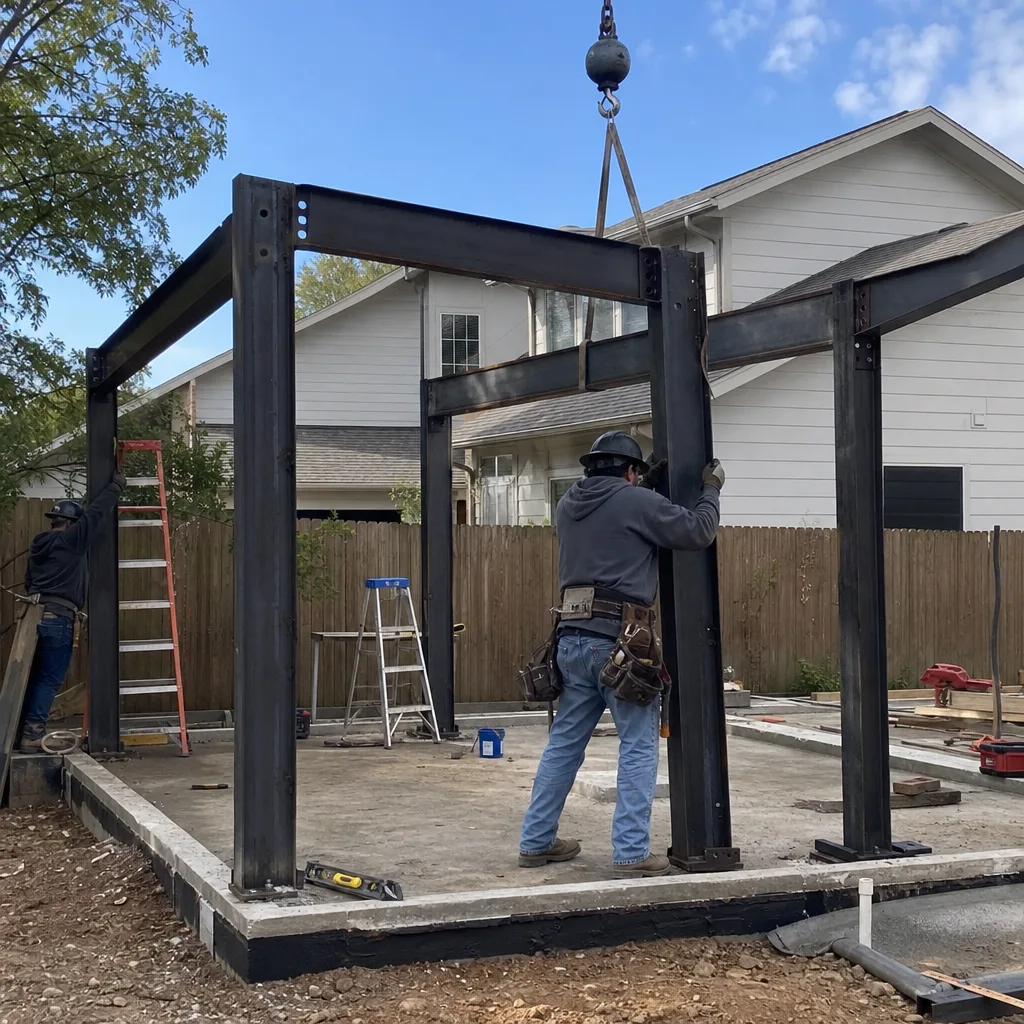
Last updated October 15, 2026
ADU Cost Breakdown: The Austin Homeowner’s Reference for 2026
The cheapest ADU bid you’ll see in Austin is almost certainly missing $40,000 to $70,000 worth of work. Utility connections, permit fees, and site preparation are routinely left off the headline number contractors advertise online. This guide names each cost category, gives current Austin dollar ranges for 2026, and maps the five decisions that determine whether you’ll spend $180 or $400 per square foot. For a deeper dive, see our The Complete Guide to ADU in Austin. You’ll leave with a budget you can defend, not a number you’re hoping holds up.
Quick Answer
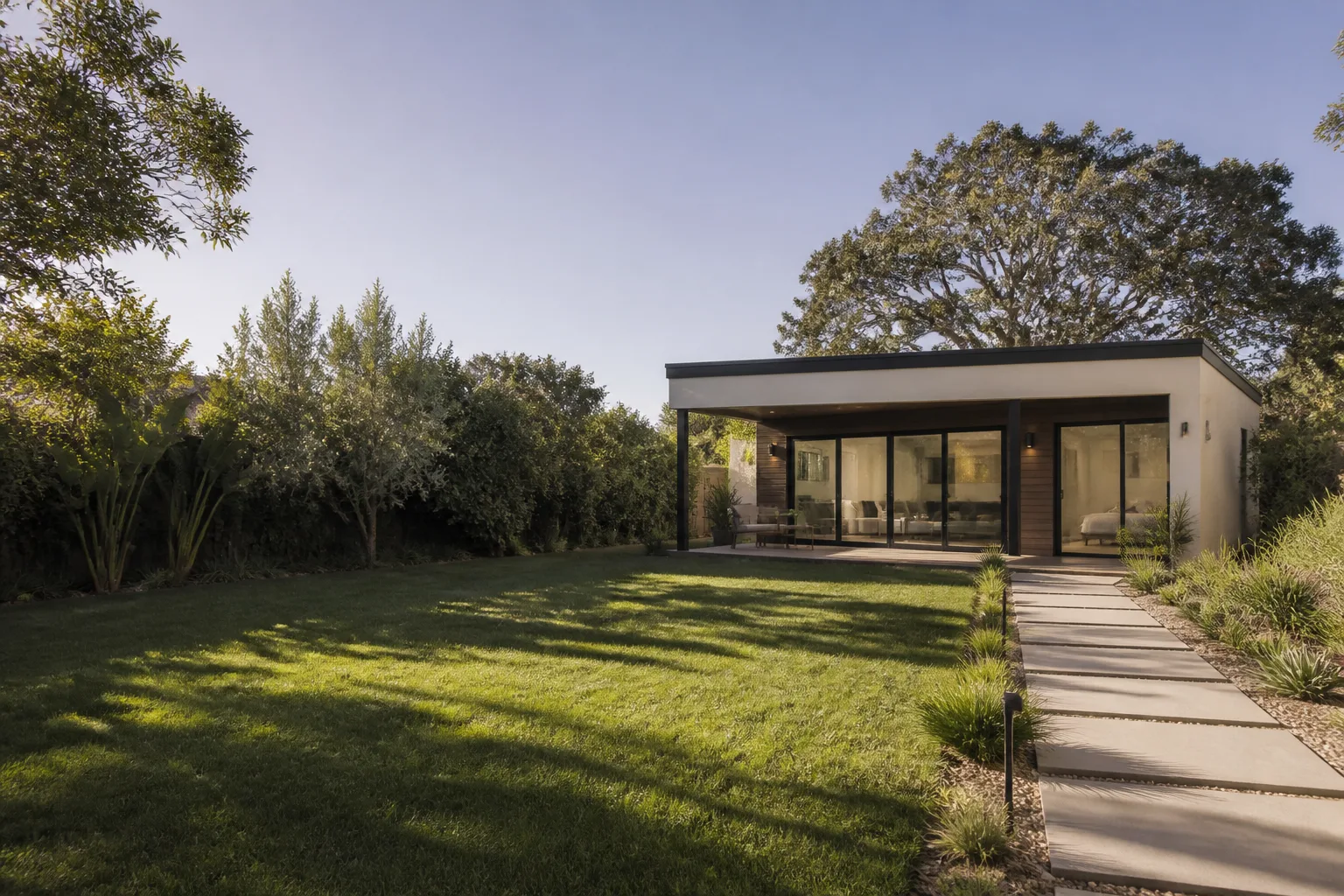
Building an ADU in Austin in 2026 costs between $180 and $400 per square foot all-in, with most attached garage conversions landing at $130,000 to $220,000 and detached units running $220,000 to $380,000. The spread comes from five decisions: foundation type, utility tie-in distance, roof design, interior finish level, and whether you choose a fixed-price or time-and-materials contract. A written, itemized contract before work starts is the single biggest protection against overruns.
Table of Contents
- The Five Cost Categories Every Austin ADU Budget Must Include
- Why Utility Connections Vary by $20,000 to $50,000 in Austin
- Design Choices That Compound Costs: Roof, Millwork, and HVAC
- Fixed-Price vs. Time-and-Materials: What Overruns Actually Look Like
- Financing Your Austin ADU in 2026: HELOCs, Construction Loans, and the Pilot Program
- Austin ADU Permits: Fees, Timelines, and What Triggers Extra Review
- Common Mistakes to Avoid
- When to Call a Professional
The Five Cost Categories Every Austin ADU Budget Must Include
Most online ADU cost calculators fail Austin homeowners because they only count hard construction costs: framing, drywall, roofing, and finishes. A real budget has five buckets. They are hard construction, site work, permits and fees, utility connections, and owner soft costs. Here’s what each actually costs in Austin in 2026.
1. Hard Construction: $150 to $280 per square foot
Hard construction is the structure itself. In Austin, a standard stick-built ADU with mid-range finishes runs $150 to $220 per square foot. A premium build with custom millwork, high-end appliances, and upgraded insulation pushes toward $280. Prefab options from builders like Dvele or Cover often land in the $220 to $320 per square foot range when you factor in transportation and crane costs, but they arrive faster and reduce on-site labor variability.
2. Site Work: $15,000 to $45,000
Site work is where estimated budgets go to die in Austin. This bucket includes tree removal, grading, retaining walls, driveway extension, soil correction, and stormwater management. Austin sits on a mix of limestone and expansive clay, particularly in neighborhoods east of I-35 and in the hill country west of MoPac. Expansive clay shifts with moisture. A geotechnical report costs $2,000 to $5,000 and determines whether you’ll need piers, extra compaction, or engineered fill. Skipping the report saves money up front and risks foundation movement later.
3. Permits and Fees: $8,000 to $18,000
The City of Austin charges permit fees based on project valuation. A typical ADU permit runs $5,000 to $12,000. On top of that, you’ll pay for plan review, tree permits if protected species are involved, and school district impact fees in some areas. Expect total permitting costs between $8,000 and $18,000 depending on complexity and whether variances are required. See ADU Permits, Codes & Inspections in TX: What You Need to Know for a full breakdown of requirements.
4. Utility Connections: $10,000 to $60,000
This is the most misunderstood cost in Austin ADU projects. Connecting a new unit to water, sewer, and electricity is not a flat fee. We dig into this fully in the next section.
5. Owner Soft Costs: $10,000 to $25,000
Soft costs are the services you pay for that aren’t physical construction. Architectural and structural drawings run $8,000 to $20,000 for a custom ADU. You might also pay for a survey ($1,500 to $3,500), an arborist report ($500 to $1,500), and interior design consultations if you’re customizing finishes. Many Austin homeowners forget these until they’re due, and they become surprise line items that erode trust in the process.
Together, these five categories explain why one Austin homeowner builds a 600 square foot ADU for $180,000 while another spends $260,000 on the same footprint. The difference is rarely greed. It’s site conditions, utility distance, and finish choices.
If you’re weighing a full custom build against a garage conversion, see our Garage Conversion Contractor in Austin page for a comparative look at cost per square foot on existing structures.
Why Utility Connections Vary by $20,000 to $50,000 in Austin
Utility connection costs in Austin range from $10,000 on a best-case lot to $60,000 or more on a difficult one. The three variables are distance from the main, the Austin Energy infrastructure zone your property sits in, and whether trenching crosses existing hardscape or protected root zones.
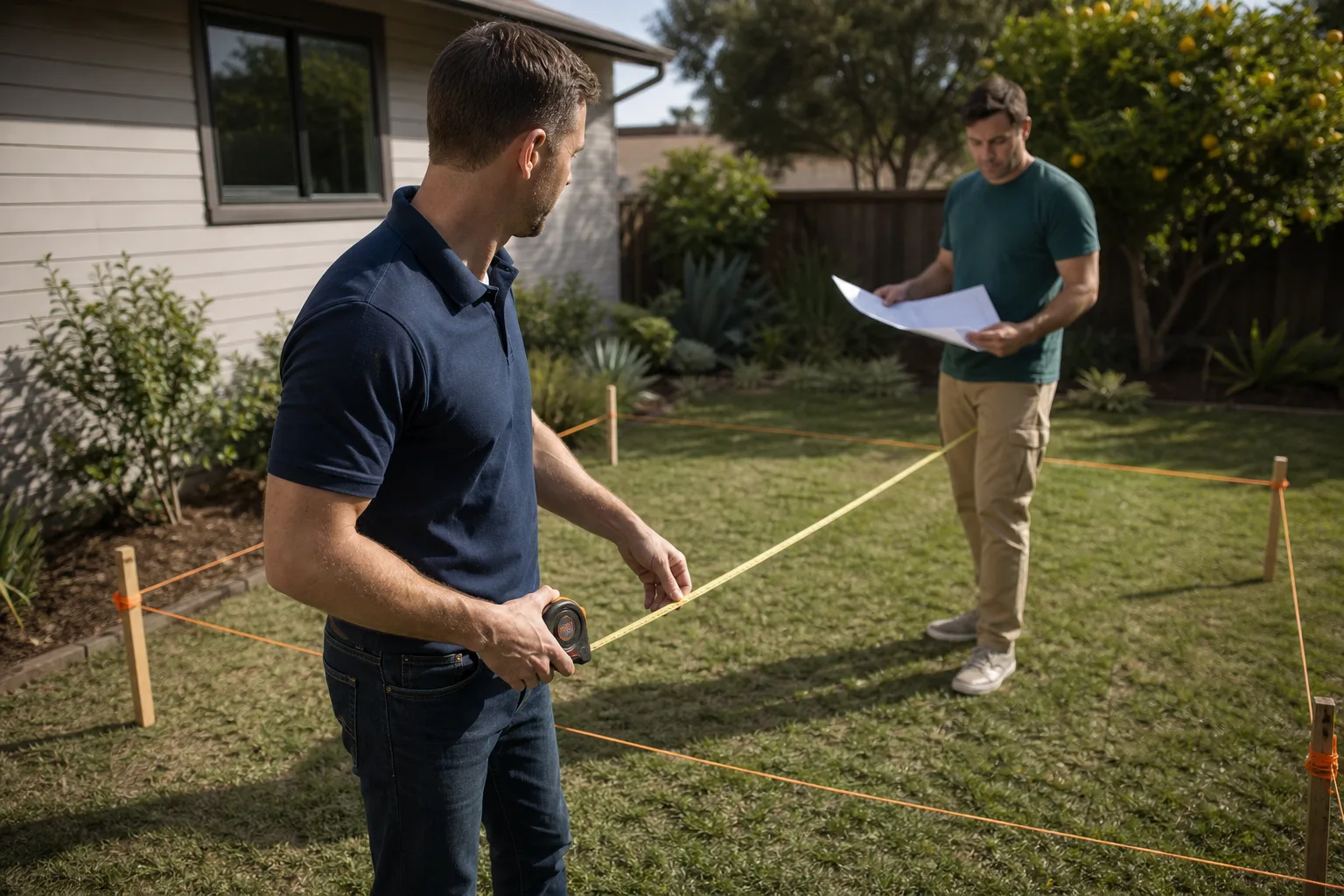
Distance from the main is straightforward. Electrical cable, water line, and sewer lateral all cost per linear foot to run. A lot with the main at the curb and the ADU in the backyard is the cheap scenario. A lot where the ADU sits 150 feet from the nearest connection point is the expensive one. At $100 to $250 per linear foot for trenching and conduit depending on soil conditions, those 150 feet alone can top $20,000.
Austin Energy zones matter more than most people realize. Properties in older central Austin neighborhoods like Hyde Park or Bouldin Creek often have aging infrastructure with limited capacity on the existing transformer. If the transformer can’t handle an additional dwelling unit, Austin Energy may require an upgrade. That upgrade cost passes to the homeowner and can run $10,000 to $30,000. Newer subdivisions in areas like Mueller or Circle C typically have capacity headroom, which keeps connection costs at the lower end of the range.
Sewer is another wild card. If gravity connection to the main isn’t possible due to slope, you’ll need a grinder pump and force main. That adds $8,000 to $15,000 and introduces a mechanical component that will eventually need service. These are not line items you’ll see in a marketing quote.
The best way to know your utility costs is a site feasibility assessment before you commit to design. At Seedling ADU Austin, we’ve watched families fall in love with a floor plan only to discover their lot needs $35,000 in infrastructure work. Knowing first changes the conversation entirely.
Design Choices That Compound Costs: Roof, Millwork, and HVAC
Design decisions don’t add to your ADU budget. They multiply through it. A $4,000 roof upgrade can trigger $8,000 in framing changes, which cascades into additional engineering, longer build time, and higher labor costs. Understanding these forks before you name a finish lets you spend where it matters and skip where it doesn’t.
Flat Roof vs. Pitched Roof
Flat roofs look modern and are common on prefab designs from Boxabl and Mighty Buildings. They also cost 15 to 25 percent more to build correctly in Austin. A flat roof needs a more robust waterproofing system, typically TPO or standing seam metal with a tapered insulation layer for drainage. Pitched roofs shed water naturally and distribute structural load more simply. The practical difference on a 700 square foot ADU is $8,000 to $15,000. In a city with Austin’s sudden downpours, both work fine when detailed properly. Flat roofs just demand more precision from the installer.
Custom Millwork vs. Standard Cabinetry
Custom cabinetry for a kitchenette and bathroom vanity runs $12,000 to $25,000. Semi-custom or configured stock cabinetry runs $5,000 to $10,000 for the same spaces. The cost difference compounds because custom millwork usually requires a longer lead time, more design hours, and more precise installation labor. If you’re building a rental ADU, standard cabinetry with upgraded hardware gets you 90 percent of the look for half the price. If you’re building for aging parents who will live there for 20 years, the custom route often makes sense.
Mini-Split vs. Ducted HVAC
A ductless mini-split system costs $6,000 to $12,000 installed for a typical ADU. A ducted system with attic or crawlspace ductwork runs $14,000 to $22,000. Mini-splits are quieter, more efficient for small square footage, and much simpler to maintain. Ducted systems make sense if you’re tying into an existing central system on an attached addition. For a detached ADU, mini-split is almost always the right call in Austin’s climate, where you need cooling nine months a year and heating for only the occasional cold snap.
For a full comparison of how these decisions play out across different project types, our Home Addition Contractor in Austin guide walks through the same cost forks on larger footprints.
Fixed-Price vs. Time-and-Materials: What Overruns Actually Look Like
The contract type you sign determines your financial exposure more than any design decision. In Austin residential construction, fixed-price contracts have an average overrun of 3 to 7 percent. Time-and-materials contracts average 15 to 30 percent over the original estimate. That gap is not because time-and-materials contractors are dishonest. It’s because the incentive structure changes. When labor and materials are billed at actual cost plus margin, every delay and every change order flows directly to the homeowner’s bill.
A legitimate written, fixed-price contract includes four things:
- A full scope of work that names specific materials, fixtures, and finishes by brand and model number, not by category. “Mid-grade flooring” is not a scope. “Mohawk RevWood Plus laminate, color Oak Grove, installed per manufacturer spec” is a scope.
- A site plan and elevation drawings that show exactly what will be built, where, and at what height.
- A written exclusions list that spells out what’s not included. Every honest fixed-price contract has one. If yours doesn’t, the exclusions are hidden in the contractor’s assumptions.
- A change order process that requires your written signature before any additional cost is incurred. No signature, no charge. Period.
The historical overrun difference matters more in Austin than in other Texas cities because of our permitting climate. Austin’s Development Services Department has improved turnaround times, but complex projects still catch plan review comments that extend schedules. On a time-and-materials contract, every extra week of a project manager’s time is billed to you. On a fixed-price contract, the builder absorbs that exposure. That’s not a small thing on a 10-month build.
Every estimate from Seedling ADU Austin includes a written price before any work begins, with no surprise line items after crews arrive. The 365-Day Done Right Promise means if something isn’t done right, we make it right, in writing, on every ADU, garage conversion, and home addition we build. Ben Ortega leads the team and holds that promise personally.
Financing Your Austin ADU in 2026: HELOCs, Construction Loans, and the Pilot Program
How you pay for an ADU in Austin depends largely on how much equity you hold in your current home. Three options dominate in 2026, and they serve different situations.
Home Equity Line of Credit (HELOC)
A HELOC works for homeowners with at least 15 to 20 percent equity after the line is drawn. Current rates in Austin run roughly 7.5 to 9 percent, variable. The advantage is flexibility: you draw as needed during construction, and interest only accrues on money actually spent. The disadvantage is that variable rates move, and Texas law limits HELOC borrowing to 80 percent of home value combined with your primary mortgage. For a $250,000 ADU, you’ll need significant equity to make this work.
Construction Loan
A construction loan converts to a permanent mortgage when the project is complete. This works for homeowners with less equity and for projects that will increase property value substantially. Expect rates around 6.5 to 8 percent fixed in 2026, with a draw schedule that pays the contractor at defined milestones. Construction loans require more paperwork than HELOCs and typically charge an origination fee of 1 to 2 points.
Austin’s ADU Financing Pilot Program
Austin launched a pilot program aimed at making ADU construction accessible to middle-income homeowners who might not qualify for traditional construction financing. The program offers low-interest loans for ADUs that meet affordability criteria, which in 2026 generally means the unit rents at or below 80 percent of Austin’s median market rate for the first five to ten years. Qualification details change from year to year, so check the City of Austin’s current guidelines before planning around this option. For a homeowner with solid but not exceptional equity, this can be the difference between building now and waiting five years.
Which Makes Sense?
- If you have 25 percent or more equity and want flexibility, start with a HELOC.
- If you have less than 20 percent equity or want a fixed rate, pursue a construction loan.
- If you’re willing to price your ADU as an affordable rental for the first years, look into the city pilot program before locking into private financing.
Talk to a lender familiar with ADU projects, not just a general mortgage broker. ADU construction loans have different appraisal methods, and an appraiser who doesn’t understand accessory dwelling unit valuation in Austin can lowball the completed value and kill the loan.
Austin ADU Permits: Fees, Timelines, and What Triggers Extra Review
Permitting an ADU in Austin takes between 4 and 9 months from submission to issued permit in 2026. The timeline depends on whether your project triggers additional review pathways. Three triggers account for most delays.
First, heritage trees. Austin protects certain tree species by size. If your ADU site falls within the critical root zone of a protected tree, you’ll need an arborist report and possibly a tree permit. This adds $1,500 to $4,000 and two to six weeks of review. Second, floodplain proximity. Lots near creeks or floodplains require additional engineering and possibly elevation certification. Third, historic district overlay. Parts of Hyde Park, Clarksville, and the East Cesar Chavez neighborhood sit in historic districts with design review boards that must approve exterior elevations. That review adds time but rarely adds direct cost beyond plan revisions.
Your contractor should handle all municipal permitting unless you’ve agreed otherwise, and you should expect this work to be itemized in your written price. If a contractor offers to skip permits, that’s not a cost savings. It’s a liability transfer. An unpermitted ADU in Austin is flagged during any future sale appraisal and can create title problems with lenders. It also means no city inspection on work like electrical rough-in, which a family with kids will sleep next to for years. Permits are not optional.
Common Mistakes to Avoid
- Not getting a soil report before buying plans. Expansive clay in East Austin and limestone shelves in Westlake create very different foundation requirements. You can’t know which you’re building on until a geotech bores a hole. Skip this and you’ll either overbuild and waste money or underbuild and risk cracks.
- Comparing bids with different scopes. A $50,000 spread between two Austin ADU bids almost always comes down to what’s included, not what’s being charged for similar work. Get apples-to-apples scope sheets before comparing numbers.
- Underestimating utility connection costs on older lots. Central Austin homes built before 1970 often have undersized electric service or aging sewer laterals. The ADU cost doesn’t care that the main service is decades old. The panel upgrade is part of your project either way.
- Choosing finishes before understanding structure. Quartz countertops on an ADU with an undersized foundation is money spent in the wrong order. Nail the bones first, spend on surfaces second.
- Not accounting for owner soft costs. Architectural drawings, surveys, and interior design help are real money. Tax them into your budget at 4 to 6 percent of total project cost, or they’ll surface as stress later.
- Skipping a written exclusions list. If your contract doesn’t say what’s excluded, you’ll discover it at the worst time. Window coverings, landscaping restoration, fence repair after equipment access, all fair game. Get it in writing first.
When to Call a Professional
Some parts of an ADU build can be done thoughtfully by an owner: selecting finishes, researching prefab brands, walking through a model unit. Other parts should not be. Foundation design on Austin’s variable soils, electrical service upgrades, and any work involving gas lines or structural modification require a licensed professional. The risks of getting these wrong are not cosmetic. They’re structural, electrical, and in some cases life-safety issues that no YouTube video covers adequately. If you’re entering the planning phase and want site-specific numbers rather than online averages, Seedling ADU Austin offers free estimates in Austin. Call (254) 615-3842, and a live person answers 24/7. Shoe covers and drop cloths come on every visit, and a photo of the clean-up is sent before the crew leaves. That’s the Cedarwell Care Promise, and it applies to every estimate and every build.
Frequently Asked Questions
A complete ADU in Austin costs $180 to $400 per square foot all-in, with most projects landing between $220,000 and $380,000 for a detached 700 to 900 square foot unit. The range depends on site conditions, utility distances, finish levels, and contract type. Call (254) 615-3842 for an exact quote on your lot. Estimates are free.
A garage conversion is typically the least expensive path to a legal ADU in Austin, running $130,000 to $220,000 because the foundation, framing, and roof are already standing. Prefab units from Boxabl or Mighty Buildings can also reduce on-site labor costs, though utility connections and site prep remain the same regardless of construction method.
On a fixed-price contract with a written exclusions list, price changes happen only when you approve a change order in writing. On a time-and-materials contract, price changes are routine. Austin residential project data shows fixed-price contracts average 3 to 7 percent in change orders versus 15 to 30 percent on time-and-materials. Ask for a written, fixed price before any work begins.
Yes, every legal ADU in Austin requires city permitting, including building, electrical, plumbing, and mechanical permits. Unpermitted ADUs create title problems during sale and mean no city inspection on electrical or structural work. Permitting fees run $8,000 to $18,000 including plan review and impact fees.
From design kickoff to move-in, expect 10 to 16 months in 2026. That timeline includes 2 to 3 months for design and engineering, 4 to 9 months for permitting, and 4 to 6 months of on-site construction. Prefab units from Cover or Dvele can compress the on-site phase but not the permitting calendar.
For most Austin homeowners, yes. ADUs in central neighborhoods rent for $1,400 to $2,400 per month in 2026, and the units add appraised value roughly proportional to construction cost. The strongest returns come from garage conversions and prefab units that avoid the high end of the hard construction range. A real budget, not a headline number, is what makes the investment work.
The Bottom Line
Austin ADU costs in 2026 come down to what you know before you sign. You now know the five cost categories, the utility variables that swing budgets by $50,000, the design forks that compound, the contract structures that protect you, and the financing paths that fit different equity levels. The cheapest bid is rarely the cheapest project. The clearest bid is. Get your numbers in writing, get your exclusions in writing, and get your promise in writing. The right ADU starts small and lasts a lifetime.
Written by Ben Ortega, Owner at Seedling ADU Austin, serving Austin since 2001.