Tuff Shed Junior ADU Conversion: The Austin Owner’s Guide
A Tuff Shed junior ADU conversion in Austin typically runs $18,000 – $42,000 installed, depending on whether the shed shell already has electrical rough-in, insulation, and a bathroom stub-out. We stock conversion-specific materials for Tuff Shed builds and can usually begin within two to three weeks of your estimate. Most owners call us after the shed has been sitting for a season or two and they realize the shell is fine but the comfort systems, the power, or the interior finish simply were never built for living. What felt like a smart shortcut starts to show its gaps the first time a Texas summer turns the interior into an oven.
We’re an independent Austin ADU builder, not affiliated with Tuff Shed. But we work with their structures regularly, and we know exactly where the standard Tuff Shed product stops being a shed and starts needing to become a home.
Which Tuff Shed Models This Applies To
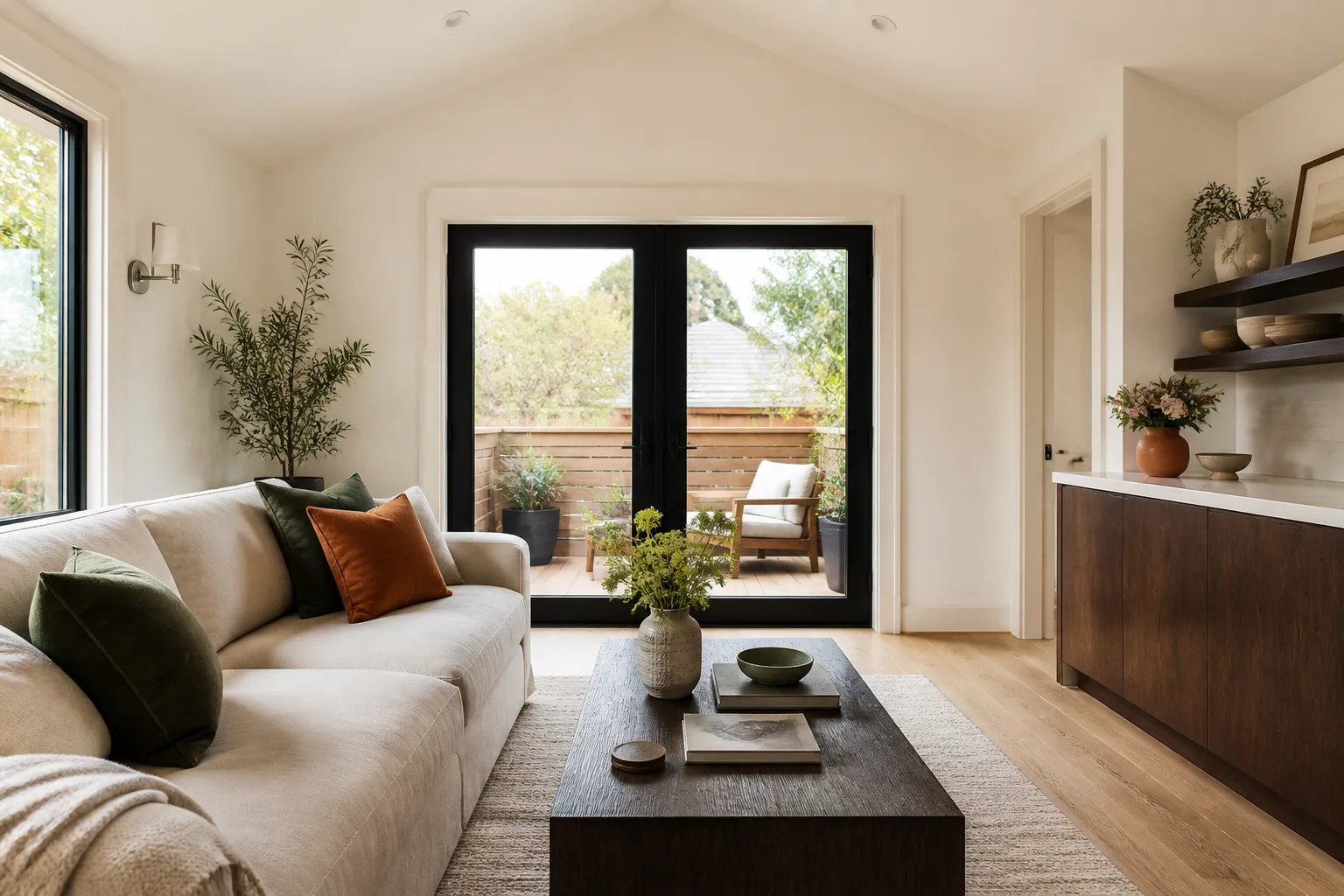
Most of the Tuff Shed junior ADU conversions we handle in Austin start with either a Premier PRO series or a Sundance series shell, though we’ve also worked on the Tall Barn and Ranch models where the ceiling height supports a lofted sleeping area. The compatibility issue that trips people up is wall framing depth. Standard Tuff Shed wall studs are often 2×4 on 24-inch centers, which is fine for storage but too thin for the R-13 to R-19 insulation Austin’s climate really demands once you’re conditioning the space year-round. Some Premier PRO builds do use 2×6 framing, and that changes what we can fit in the walls without furring them out.
Before you buy any conversion materials, check the metal ID tag on the shed’s interior corner, usually near the door header. It lists the series, the build date, and the engineering specs. If that tag is gone, we measure stud depth, floor joist spacing, and roof pitch on site. For OEM versus aftermarket, Tuff Shed-branded components are fine for doors and trim, but for the mechanical and electrical side we always recommend standard residential products. A shed-branded mini-split doesn’t exist, and the generic units sold at big-box stores in Austin often lack the cooling capacity to hold 72 degrees in August. We size systems for the actual heat load, not the square footage on the box.
Signs Your Tuff Shed Junior ADU Conversion Is Failing
- The interior won’t hold temperature for more than an hour. This usually means the walls and roof were never properly insulated, or the vapor barrier was skipped. In Austin’s humidity, that leads to condensation inside the wall cavities, which quietly rots the framing from the inside out.
- The floor feels spongy or bounces near the center. Shed floor joists are often rated for light storage, not furniture and foot traffic. We regularly reinforce Tuff Shed floors with additional joists and a proper subfloor before laying finish flooring.
- You trip the breaker every time you run a space heater or window AC. The original electrical service on most shed builds is a single 20-amp circuit meant for a light bulb and a power tool. A junior ADU needs its own subpanel, and Austin code requires dedicated circuits for heating, cooling, and the bathroom.
- Mold or mildew smell appears after rain. Shed roof systems aren’t always flashed for a conditioned interior. The ridge cap and eave details that keep rain out of a storage shed can let vapor in once you’re running AC inside and the dew point shifts.
- The door or windows bind and won’t latch cleanly. Shed framing settles, and Tuff Shed doors are installed for storage use, not for daily living, security, or a tight air seal. A stuck door on a junior ADU is more than an annoyance; it’s a real air leakage and security problem.
Replacement Cost & What’s Included
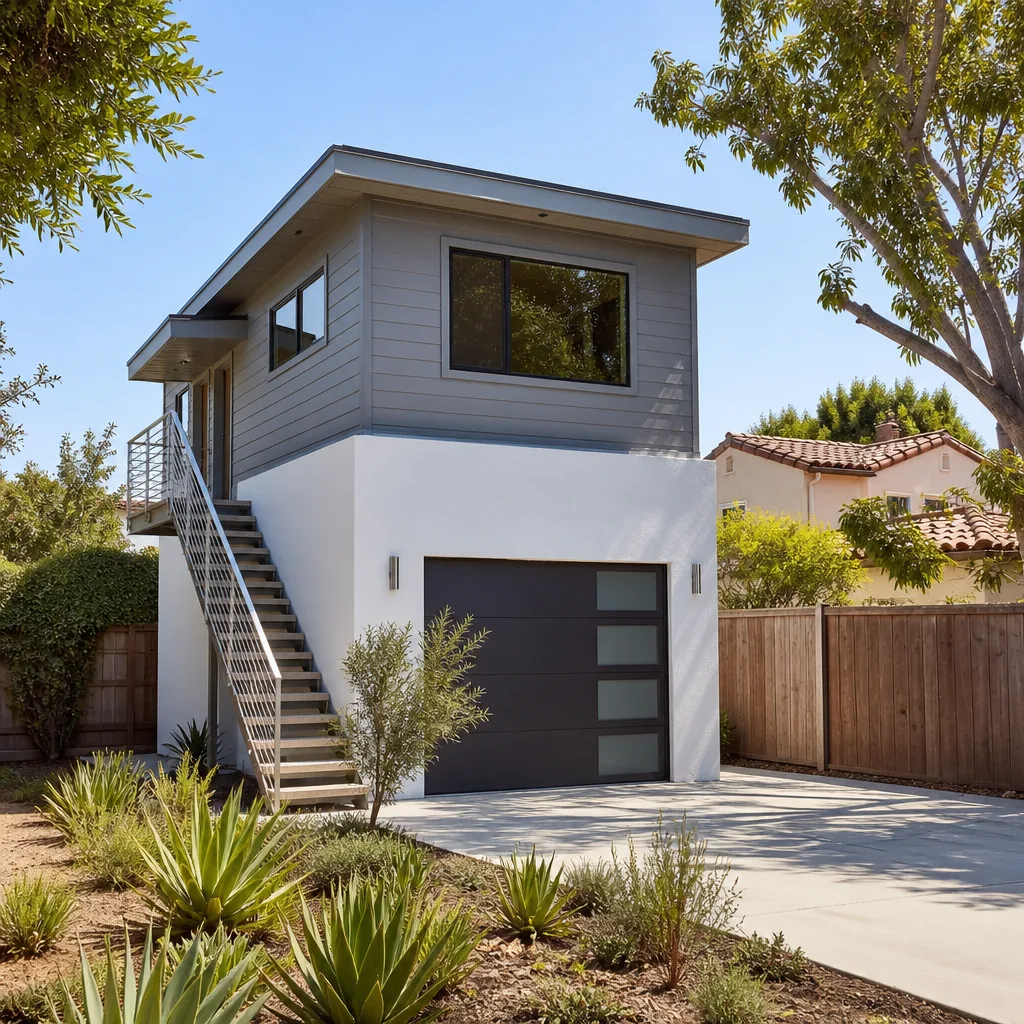
Here’s how junior ADU conversion pricing breaks down in Austin for Tuff Shed structures:
- Basic livable conversion (insulation, drywall, flooring, electrical subpanel, one mini-split): $18,000 – $26,000
- Full junior ADU with bathroom and kitchenette: $28,000 – $38,000
- Full conversion with upgraded finishes, custom built-ins, and site work: $38,000 – $42,000+
What moves the number is usually the bathroom. Adding plumbing to a shed floor means cutting and trenching for a drain line, and Austin’s clay soil doesn’t make that quick or cheap. We also have to bring the electrical service up to code, which may mean a new subpanel, trenching from the main house, and city inspections. Every estimate we write is a fixed, line-item price before work begins, and the 365-Day Done Right Promise covers the entire conversion. If the mini-split fails, the floor creaks, the door binds, we come back and make it right.
DIY or Call Us?
There are things you can safely check on your own. Look at the metal ID tag to confirm your Tuff Shed series. Peer inside the wall cavities if you have an unfinished interior and see whether any insulation exists at all. Run your hand along the floor in the center and see if it flexes. Those observations help you understand what you’re dealing with.
What you shouldn’t do is open the electrical panel, run new circuits, or cut into load-bearing walls. A Tuff Shed shell is not the same as a stick-built structure, and the wrong cut in the wrong place can compromise the roof system. Electrical work on a dwelling unit in Austin requires permits and inspections. And converting a shed to living space means meeting residential building code, not shed code. That’s a different standard entirely. If you’re unsure where your structure stands, call us at (254) 615-3842 and we’ll walk through it before you touch anything.
FAQs
With proper insulation, vapor barrier, and HVAC sizing, a converted Tuff Shed junior ADU should last 25 to 30 years as a livable space in Austin. The weak point is always moisture. If the vapor barrier is skipped or the mini-split is undersized, you’ll see framing rot inside a decade. We build for the humidity as much as the heat, and that’s the difference between a conversion that holds up and one that starts failing in year five.
Sometimes. If the shell is structurally sound and the issues are isolated, such as a failing floor section or an undersized electrical feed, we can do targeted repairs without a full conversion. But most Austin owners who call us want the space to actually be livable, and halfway measures usually mean paying twice: once for the patch, and again for the proper conversion a year later. Call (254) 615-3842 and we’ll tell you honestly which path makes sense for your structure.
A basic Tuff Shed conversion runs four to six weeks from start to finish. A full junior ADU with bathroom and kitchenette is more like eight to twelve weeks, and most of that is permitting and inspections. Austin’s permitting office moves at its own pace, and we don’t rush the parts we can’t control. We’ll tell you the timeline up front and keep it current as the project moves.
We keep the most common conversion materials on hand in Austin: mini-split units sized for small structures, subfloor reinforcement materials, moisture barriers, and residential-grade doors and windows that fit standard Tuff Shed openings. For series-specific trim or Tuff Shed-branded components, we order direct. Since we also work with Abodu, Cover, and Dvele systems, we’re used to matching parts across different prefab platforms without guessing. Before any work starts, Ben Ortega walks through the material list line by line, so you know exactly what’s being installed and why. Call (254) 615-3842 for a free estimate on your Tuff Shed junior ADU conversion.
Written by Ben Ortega, Owner, Seedling ADU Austin at Seedling ADU Austin, serving Austin and nearby areas.