Tuff Shed Garage Conversion ADU: The Austin Owner’s Guide
We stock and install Tuff Shed-compatible garage conversion parts across Austin, with most replacement jobs running $180 – $650 installed depending on the component and what we find once the wall is open. Same-day service is available for most hardware failures we keep on the truck. The way owners usually discover a problem is subtle at first: a door that doesn’t sit square in the frame anymore, a soft spot near the floor plate, or a roofline that holds water after a rain instead of shedding it.
If you converted a Tuff Shed into a garage, workshop, or bonus room and something is starting to fail, this page covers what we see most often in Austin, what it costs to fix, and how to know whether you’re dealing with a part swap or a structural issue. We’re an independent ADU and garage conversion contractor, not affiliated with Tuff Shed, but we work with their products every week and know where they hold up and where they don’t.
Which Tuff Shed Models This Applies To
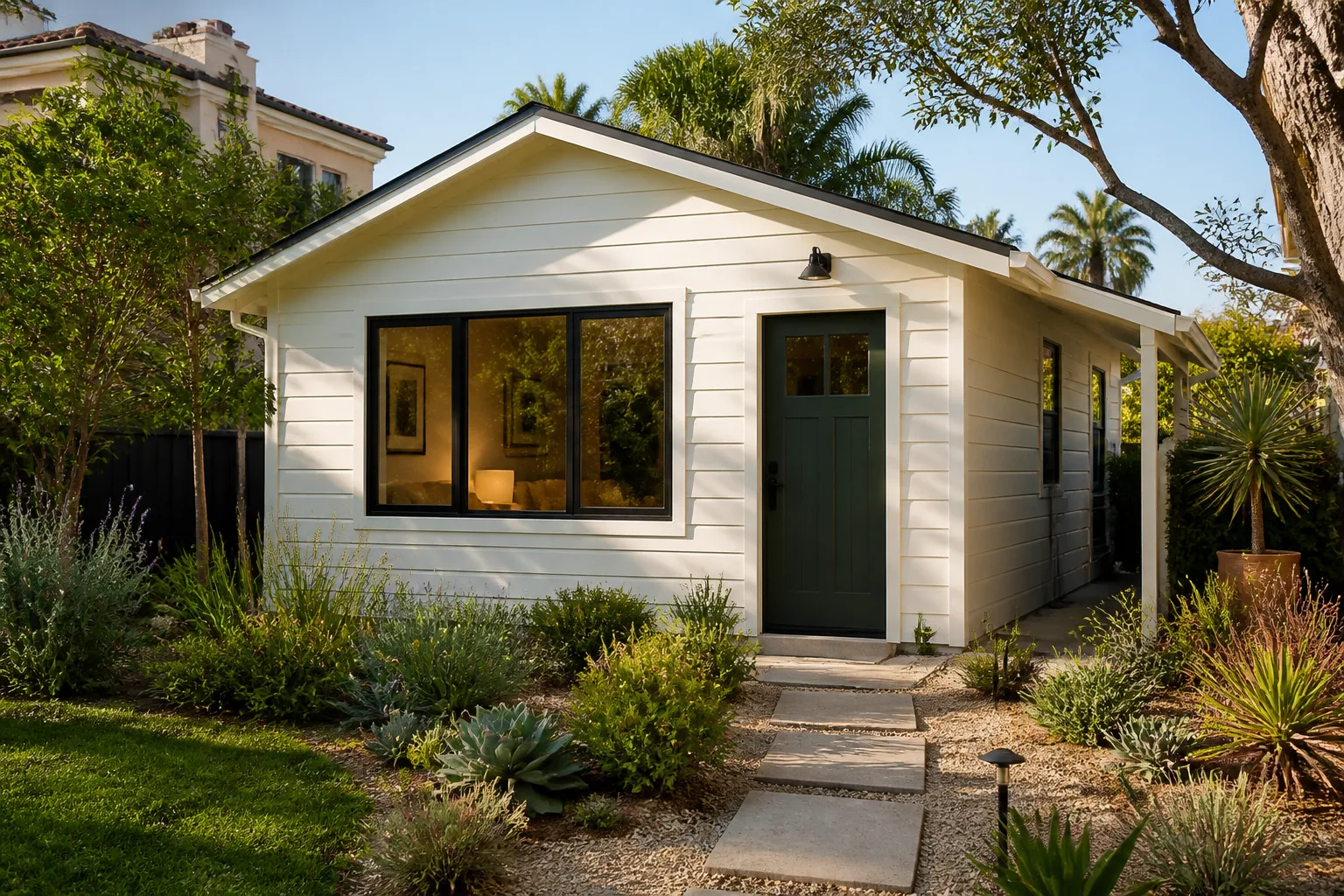
Most Austin garage conversions we see started life as a Tuff Shed Premier Pro series or Premier Ranch model, typically 10×12 through 12×24, sometimes larger for the two-car footprint conversions. The parts that fail in a converted unit depend less on the original series and more on what was added during conversion: electrical rough-in, drywall, insulation, upgraded doors, and a poured or raised foundation under the original floor system.
Here’s the compatibility gotcha most owners miss: Tuff Shed’s standard wall framing is spaced for shed-grade siding, not for the weight of drywall and insulation added during a conversion. When we open a wall to replace a failed part, we often find the original studs are 24 inches on center instead of the 16 inches Austin code wants for a livable space. That means a simple part replacement sometimes becomes a reframing job. We flag this before touching anything, and our written estimate covers exactly what we’ll do and what it’ll cost, no surprises after the drywall comes off.
For OEM versus aftermarket, Tuff Shed’s factory hardware is adequate for a storage shed but undersized for a conditioned space carrying insulation, windows, and an HVAC line. We typically recommend upgraded aftermarket hardware for door hinges, floor fasteners, and tie-down anchors, especially on pier-and-beam foundations where the original anchors were sized for a shed, not a room. The original roof sheathing on older units is another common mismatch, and we’ll tell you honestly whether a repair or replacement makes more sense for how you’re using the space.
Signs Your Tuff Shed Garage Conversion ADU Is Failing
- Door frame pulling away from the wall. The original door framing on Tuff Shed units is built for a lightweight shed door, not a steel or solid-core door added during conversion. The screws holding the door frame to the studs work loose over time, and the door stops latching cleanly.
- Soft floor near the entry or corners. Austin’s humidity and clay soil create moisture under raised floors. If the original Tuff Shed floor joists weren’t pressure-treated to ground-contact rating, they rot from the bottom up. This is the most expensive failure we fix because it usually means pulling sections of subfloor.
- Roof leaks around added vents or skylights. Conversions often add roof penetrations for bathroom vents or mini-split lines. The original roof sheathing is thin, and the flashing job matters more than the shingle. Water showing up on the ceiling six months after the conversion is a flashing failure, not a roofing failure.
- Walls bowing or rippling from the outside. Tuff Shed siding is designed to flex with temperature swings on an uninsulated structure. Once insulation and drywall are added, the wall assembly can’t move the same way, and the siding shows stress at the seams. Sometimes it’s cosmetic; sometimes it indicates the studs have twisted.
- Electrical dead spots or flickering lights when the AC kicks on. The original Tuff Shed panel, if one was installed, is typically small and shed-rated. A converted ADU with a mini-split, a few outlets, and a bathroom fan can push it past its comfortable limit. Faulty connection points at the panel are a common failure we trace during service calls.
Replacement Cost & What’s Included
In Austin, most Tuff Shed garage conversion parts land in these ranges, installed:
- Door framing repair and hardware upgrade: $180 – $420, depending on whether we’re reframing the rough opening or just replacing hardware and securing the existing frame.
- Floor joist or subfloor repair: $300 – $1,200, depending on how far the rot has spread and whether we can work from underneath or need to pull flooring from above.
- Roof flashing and penetration repair: $220 – $480, including replacing damaged sheathing around the penetration and resealing the area.
- Siding seam repair and refastening: $150 – $350 for localized work, more if whole wall sections need to come off and get reinstalled.
- Electrical panel or circuit repair: $250 – $650, including checking every connection point and bringing the panel up to what the space actually needs.
Every estimate is written before we start, and the price you see is the price you pay. We don’t add line items after the crew arrives, and we don’t discover “unexpected conditions” that triple the bill. If we find something hidden, we stop, show you what we found, and give you a new written number before touching it. Our workmanship is covered by the 365-Day Done Right Promise: if it’s not done right, we make it right.
DIY or Call Us?
There are things you can safely check yourself before calling anyone. Look at the door hardware: are the screws loose, and do they tighten? Most stripped screw holes in door framing can be temporarily shimmed. Check for standing water under the floor after a heavy rain, and look at your roof flashing from the ground with a pair of binoculars for anything obviously lifted or torn.
What I’d hesitate on is anything structural or electrical. High-tension framing repairs, floor joist replacement, and panel work are not weekend projects. A floor failure on a converted Tuff Shed in Austin’s clay soil can indicate problems that go well beyond the visible soft spot, and the Tuff Shed wall assembly was never engineered for the added load of a livable conversion in the first place. Ben Ortega has walked enough Austin conversions – including a few in Crestview with older lots and quirky foundations – to know when a repair is simple and when it’s a can of worms. Let’s look at what the space actually needs before we talk about what it could become. Call (254) 615-3842 and we’ll walk through it together.
FAQs
Original Tuff Shed hardware and framing typically last 8 – 12 years in Austin’s heat and humidity before showing failure symptoms, especially when the unit has been converted to conditioned space. Upgraded aftermarket hardware and proper sealing typically doubles that lifespan, and we’re still seeing conversions we did seven-plus years ago holding up without issues.
It depends on the part and how long it has been failing. Door hardware and flashing can usually be repaired; floor joists and twisted framing typically need replacement. We’ll tell you which category yours falls into before you spend a dollar, and the answer is always in writing. Call (254) 615-3842 for an honest assessment.
Most hardware and flashing replacements are done in one day. Floor joist repair takes two to three days depending on access and how far the rot has traveled. Elec-trical panel repairs usually land in the one-day range. We’ll give you a specific timeline in your written estimate before any work begins.
We stock the most common Tuff Shed-compatible hardware on our trucks: door frame kits, floor anchors, flashing materials, and panel repair components. For Aftermarket upgrades, we also carry quality equivalents for Tuff Shed, Abodu, Cover, and Dvele units. If your part isn’t on the truck, we order it and schedule the install for the day it arrives.
Call (254) 615-3842 for a free estimate on Tuff Shed garage conversion parts in Austin. We’ll give you a written price, a straight answer on what has failed, and a timeline that respects your family’s routine. The crew arrives background-checked and uniformed, with shoe covers and drop cloths inside the home, and a photo of the clean-up before we leave. That’s the Cedarwell Care Promise, and it’s how we work on every job.
Written by Ben Ortega, Owner, Seedling ADU Austin at Seedling ADU Austin, serving Austin and nearby areas.