James Hardie Site Prep & Utilities: The Austin Owner’s Guide
Site prep and utility work for a James Hardie-sided ADU or addition in Austin typically runs between $4,500 and $11,000, depending on what your lot is asking for: grading, trenching for water and electric, form boards, or relocating a sewer cleanout. We stock the common James Hardie flashing, trim, and moisture-management parts on the truck, and we can usually have less common pieces matched to your existing Hardie profile within a few business days. Most Austin owners discover site prep problems the way you just did: a door that suddenly drags against the Hardie trim because the grade settled, or a downspout that’s been quietly feeding water behind the Hardie lap siding for a season longer than anyone realized. Let’s look at what the space actually needs before we talk about what it could become.
Which James Hardie Models This Applies To
James Hardie doesn’t make “site prep” as a single SKU, so what you’re almost certainly dealing with is the interface between your Hardie cladding and the ground, your utilities, or your foundation. The part that fails is usually HardieTrim board (the 3/4″ thick boards used at the bottom of walls, around doors, and at utility penetrations), flashing tape or metal Z-flashing behind it, or the HardieWrap and joint flashing that keep water from getting behind the planks. The compatibility gotcha in Austin: HardieTrim comes in 5/4 and 4/4 thicknesses, and a lot of older installs used 4/4, which is no longer what most Austin supply houses keep on the shelf. If your trim is 4/4 and you need to match it, we’ll often mill the 5/4 board down rather than leave you with a proud edge that catches water. For the siding itself, HardiePlank lap siding (5/16″ thick, 8-1/4″ wide) and HardiePanel vertical siding (5/16″ thick, 4’x8′ sheets) both have specific clearance rules over grade: 6″ minimum to soil, 2″ minimum to hardscape. In Austin’s clay soil, that 6″ clearance gets violated constantly as ground swells and shrinks through our wet-dry cycles, and that’s when the bottom edge of the Hardie starts wicking moisture and swelling. OEM Hardie trim and flashing is our default because the color match (Arctic White, Cobble Stone, Monterey Taupe, etc.) is exact, but for flashing tape and fasteners we’ll spec high-quality aftermarket equivalents that often outperform Hardie’s own in our summer heat. Independent note: Seedling ADU Austin is not affiliated with James Hardie; we’re an independent Austin contractor who works with Hardie materials daily.
Signs Your James Hardie Site Prep & Utilities Is Failing
- Bottom edge of Hardie planks darkening or swelling. The 6″ ground clearance has been buried by soil creep, mulch, or a new flower bed, and the fiber cement is pulling moisture up like a wick. In Austin’s August heat the boards dry fast enough that owners miss it until fall rains come.
- Trim board pulling away from the wall at a door corner. The door threshold is letting water behind the HardieTrim, and the corner is delaminating. You’ll see a hairline gap that widens after every heavy rain.
- Efflorescence or white chalk on the foundation below a Hardie wall. Water is getting behind the siding and finding its way down to the slab. The white powder is minerals left after the water evaporates, and it means your flashing has failed somewhere uphill of that spot.
- Utility penetrations (hose bibs, AC lines, electrical conduits) showing rust on the surrounding flashing or staining on the Hardie. The original installer likely caulked instead of flashed, and Austin’s intense sun has hardened that caulk until it cracked. Caulk is not flashing.
- Soft or rotted OSB behind lower Hardie courses near a downspout. If a downspout terminates against the foundation instead of a proper drain, the splash-back saturates the wall assembly. By the time you can push a screwdriver into the sheathing through the siding gap, you need more than a part swap; you need the site drainage corrected first, then the wall dried and re-skinned.
Replacement Cost & What’s Included
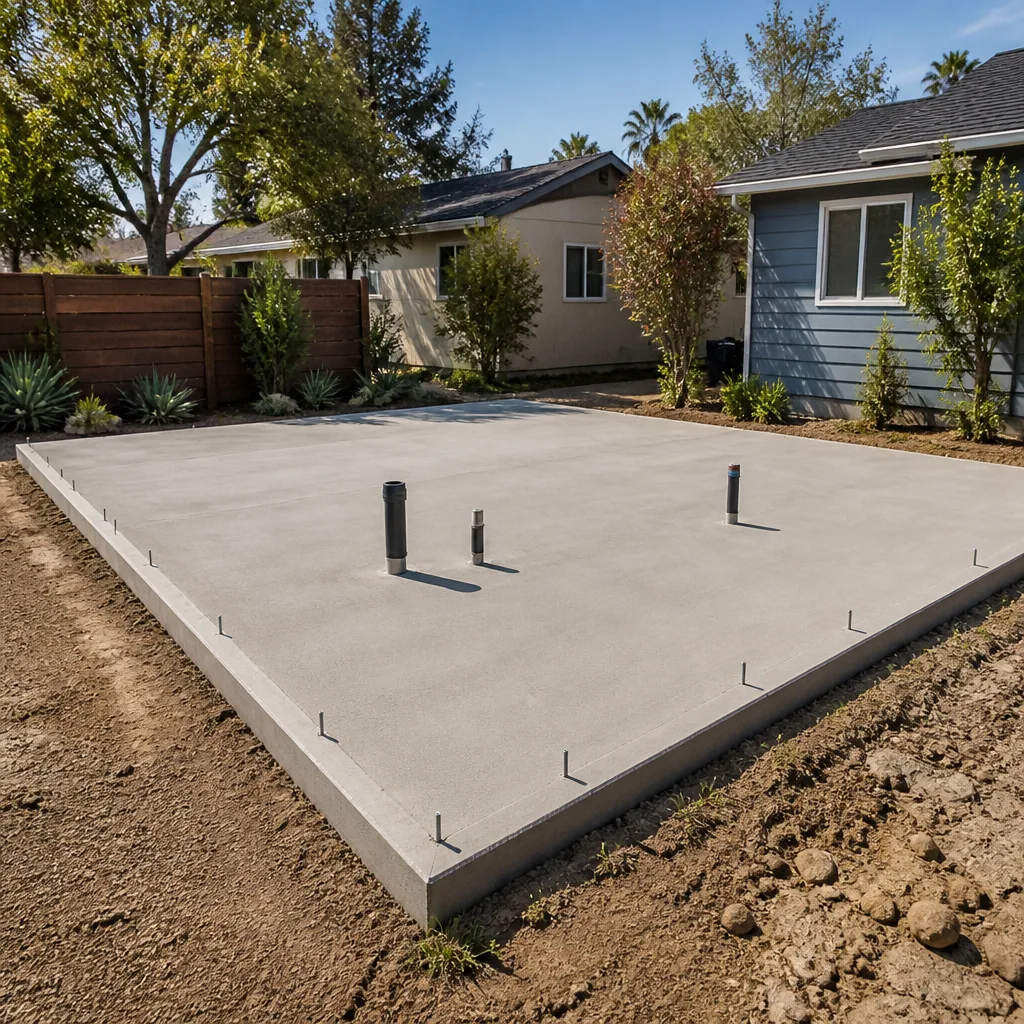
In Austin, you should plan on these installed ranges:
- Matching and replacing a run of bottom HardieTrim with proper Z-flashing: $850-$1,400 per side of the structure, depending on length and whether we’re cutting the existing siding back to fit new flashing.
- Re-establishing ground clearance (regrading a few inches, adding a swale): $1,100-$2,600 for a typical ADU or single-story addition.
- New downspout extensions and drainage tie-in: $600-$1,900, depending on run length and whether we daylight to a pop-up emitter or connect to an existing French drain or storm line.
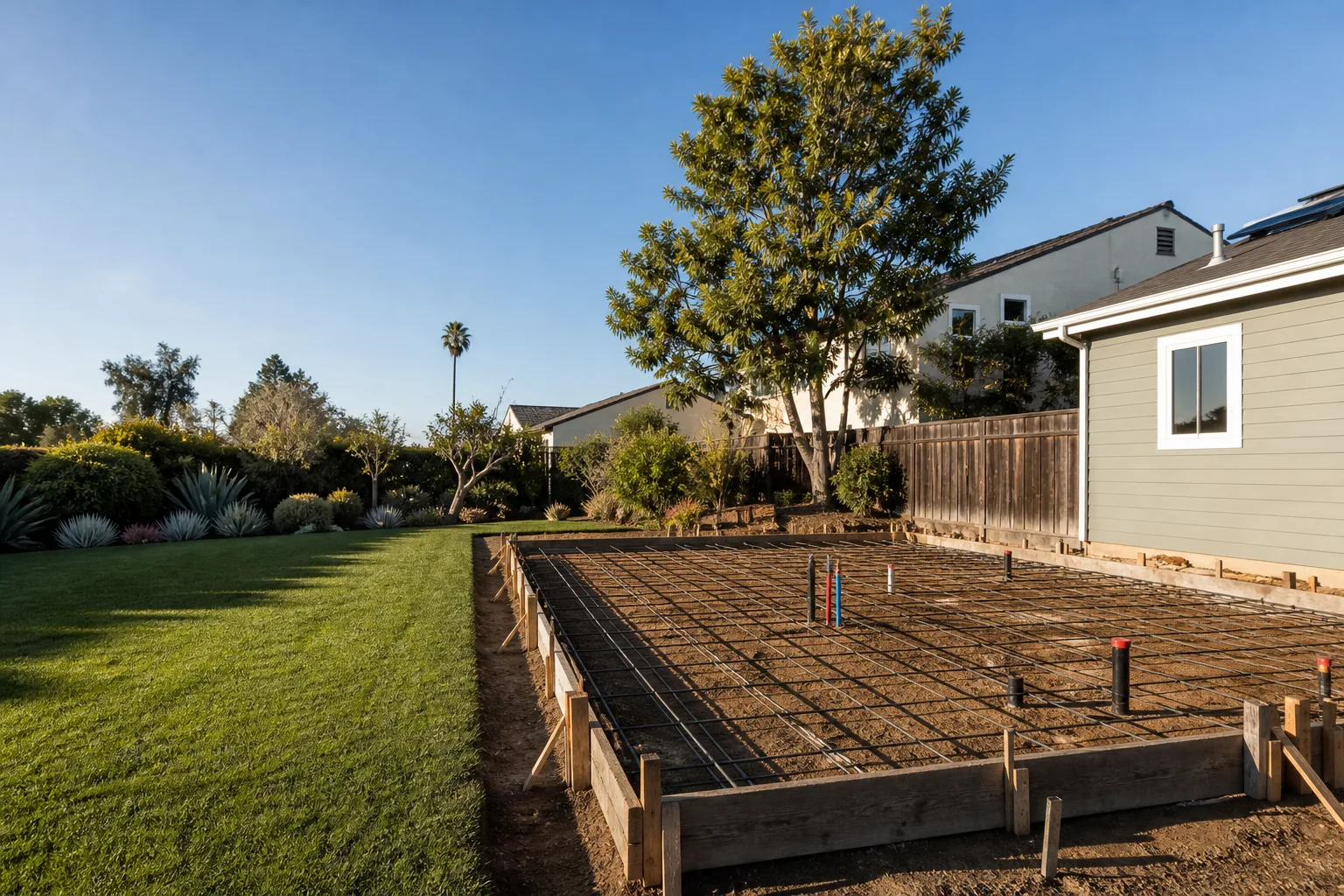
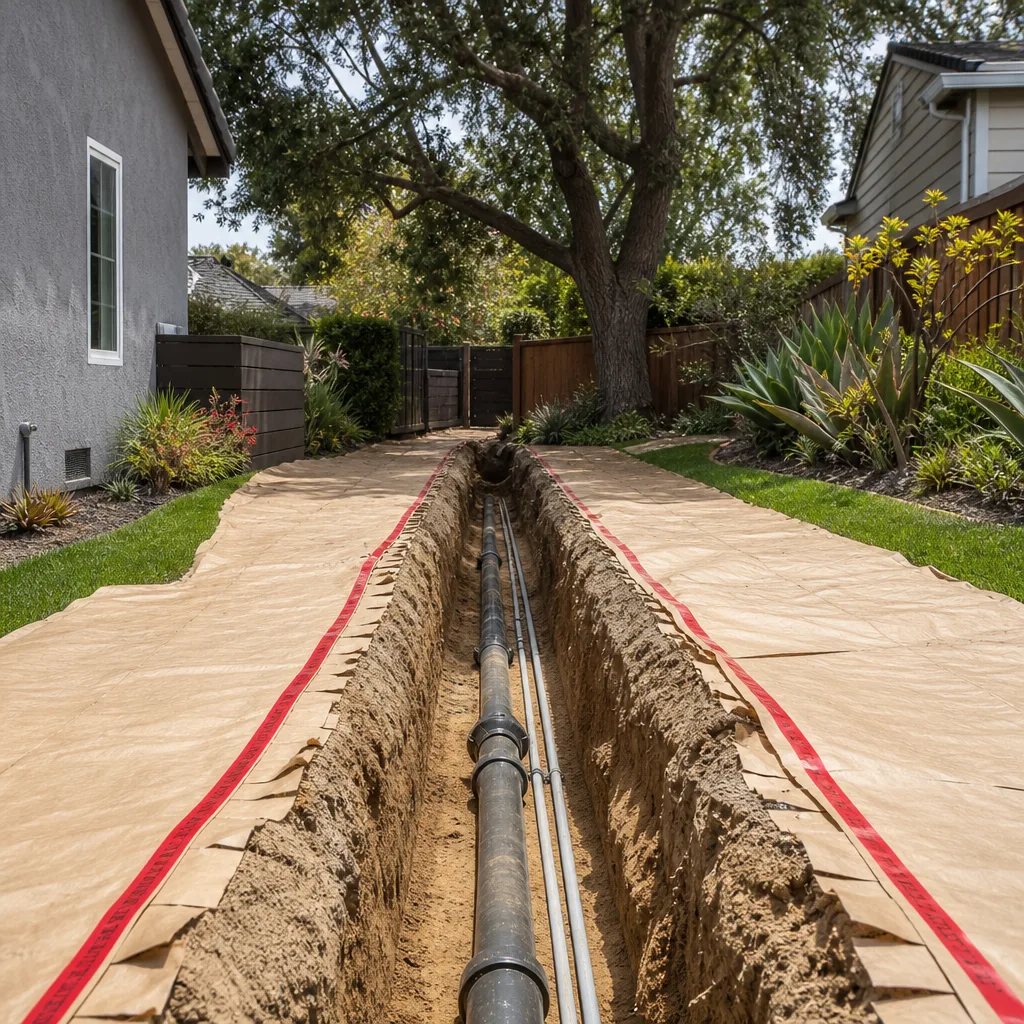
- Full utility-trench prep before a new ADU pad (water, electric, sewer, comms): $3,000-$6,800 for typical Austin lot conditions, including backfill in lifts, compaction, and site cleanup.
What drives the range in your case is what we find when we open the wall or dig the trench. In the Crestview neighborhood, for example, Ben Ortega has trenched through everything from abandoned clay-pipe sewer stub-outs to 1950s-era buried trash pits that no utility locate flagged. That’s why our price is always written before any work starts, and it’s a fixed number, not an opening bid. Every part of the site prep and utilities work we do is covered by our 365-Day Done Right Promise: if the flashing leaks or the grade settles and we didn’t catch it, we come back and make it right. On the wall and trim work specifically, we layer the Hardie-recommended flashing sequence: a drainage gap, proper Z, and a kickout at every penetration.
DIY or Call Us?
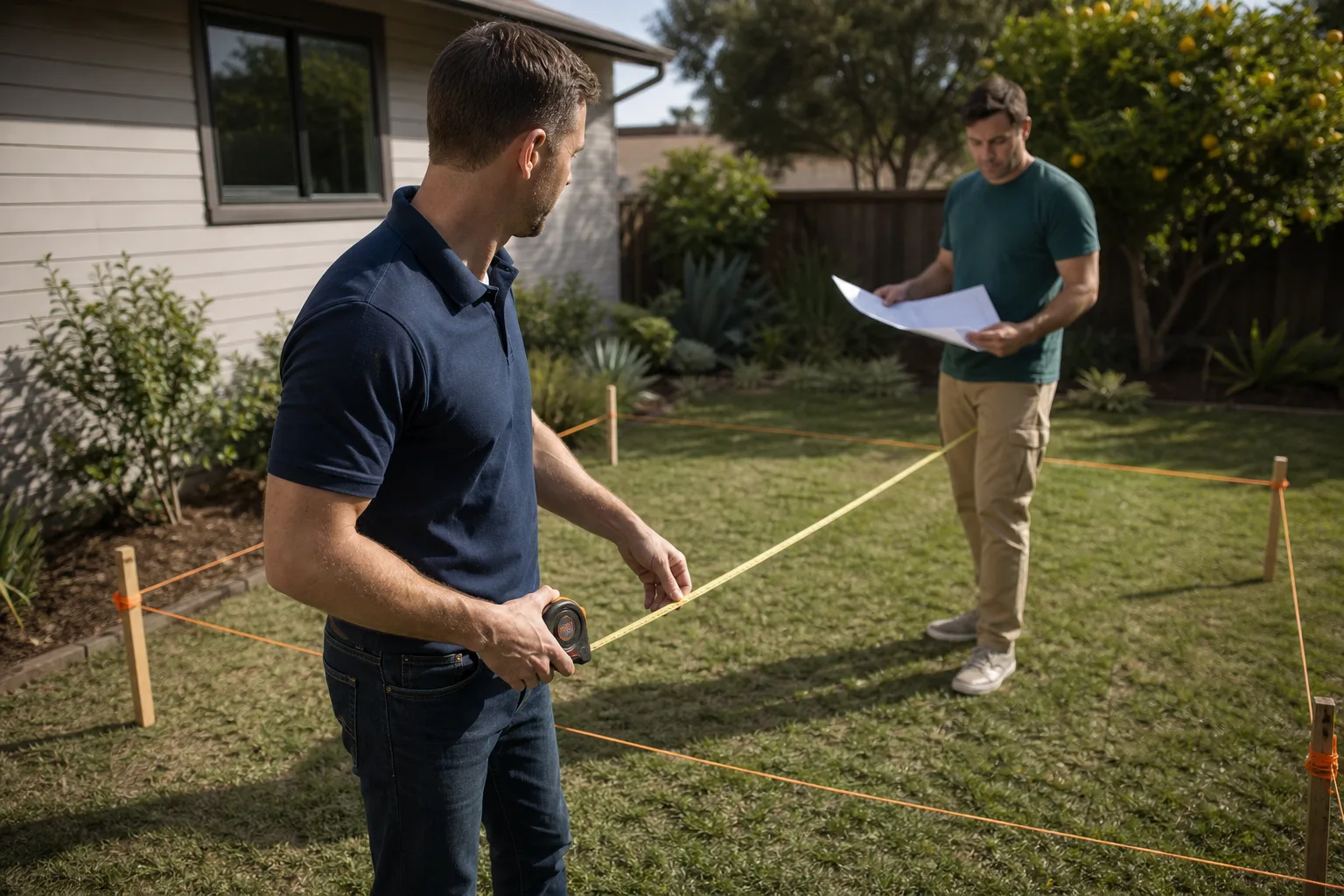
Site prep and utilities work is not the place to learn by YouTube video. If you’re talking about grading, trenching, or relocating drain lines, please do not take this on yourself: a mis-sloped sewer line or a power line nicked by a shovel is a legitimate hazard, and trench collapses in Austin’s expansive clay have caused serious injuries. Even the “safe” part of this job, re-flashing HardieTrim at the base of a wall, has one critical rule: fiber cement is silica-heavy and produces fine dust when cut, so any cutting should be done with a Hardie blade, a dust shroud, and a mask, outdoors, never inside the home. What you can safely do yourself is the diagnosis: pull back a few inches of mulch to check ground clearance, look at the condition of the caulk and flashing around penetrations, and note where your downspouts discharge. What we’ll do is come out, give you a written line-item price, and if you want, correct the grade, the flashing, or the utility trench with a background-checked, uniformed crew that will leave the site flat, the Hardie properly lapped, and a photo of the finished cleanup before we pull away. Call (254) 615-3842 and we’ll schedule a time to walk your lot together.
FAQs
Hardie’s published warranty runs 30 years on the siding, but the failure we see in Austin is almost never the material itself; it’s the installation details at grade, flashings, and penetrations. When the site prep is done right (6″ clearance, positive drainage, proper Z and kickout flashing), Hardie can easily last 25-30 years here. When it’s not, the bottom course can start showing problems in as little as 4-6 years. Call (254) 615-3842 and we’ll tell you exactly where your installation stands.
Sometimes the trim can be saved with a localized patch and new flashing, but if water has been getting behind the board for more than one Austin rainy season, the sheathing behind it likely needs to be checked too. We’ll always quote the least invasive option that will actually hold up. Call (254) 615-3842 for an honest assessment, not an upsell.
Most trim-and-flashing corrections take a day, including the site cleanup. Grading and drainage work with a small machine is usually 1-2 days. Full utility trenching for a new ADU, including backfill and compaction, runs 2-4 days depending on the length of the runs and what’s under the grass.
We keep standard HardieTrim (5/4, primed, 7/16″ and 3/4″ thicknesses), HardiePlank lap siding in common colors, and flashing tapes and Z-metal on the truck. Oddball items, like color-matched HardiePanel sheets or matching an older 4/4 trim profile, may take 3-5 business days to bring in from our Austin suppliers. Call (254) 615-3842 and we’ll confirm whether the part is on the truck or a short order away.
Call (254) 615-3842 for a free estimate on your James Hardie site prep or utility work. Ben and the crew will walk the lot with you, explain what’s failing and why, and hand you a written price before any tool touches the ground.
Written by Ben Ortega, Owner, Seedling ADU Austin at Seedling ADU Austin, serving Austin and nearby areas.