James Hardie Junior ADU Conversion: The Austin Owner’s Guide
We stock and install James Hardie-compatible Junior ADU conversion components across Austin, with most complete conversions running between $14,500 and $38,000 depending on the size of the existing structure and what the lot will allow. If your Junior ADU conversion is showing signs of water intrusion, siding separation, or framing stress, we can usually get a technician out to assess it within the week. Most Austin owners discover the problem the same way: a damp spot near the base of the wall, a gap that wasn’t there last spring, or a door that suddenly sticks after a heavy rain.
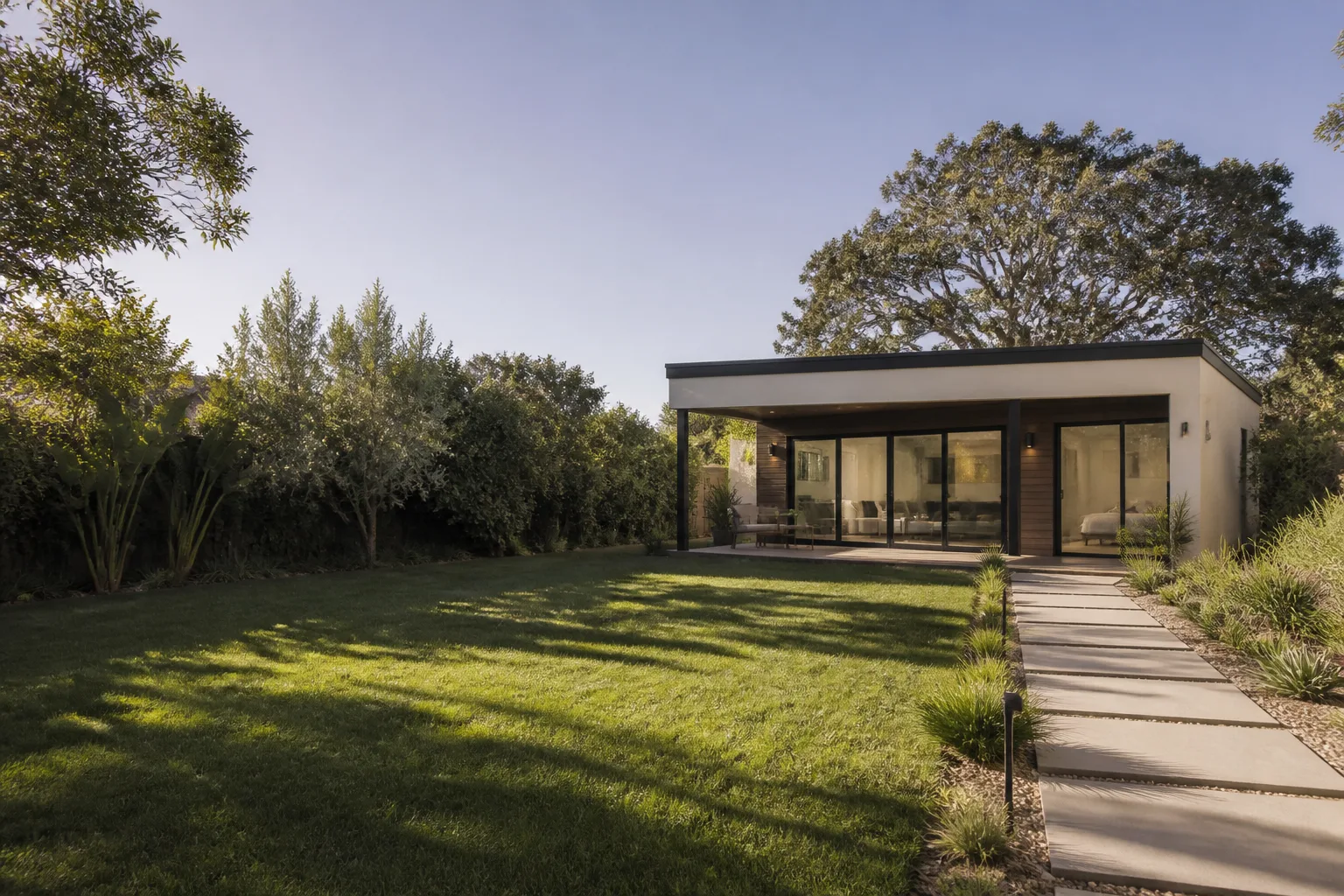
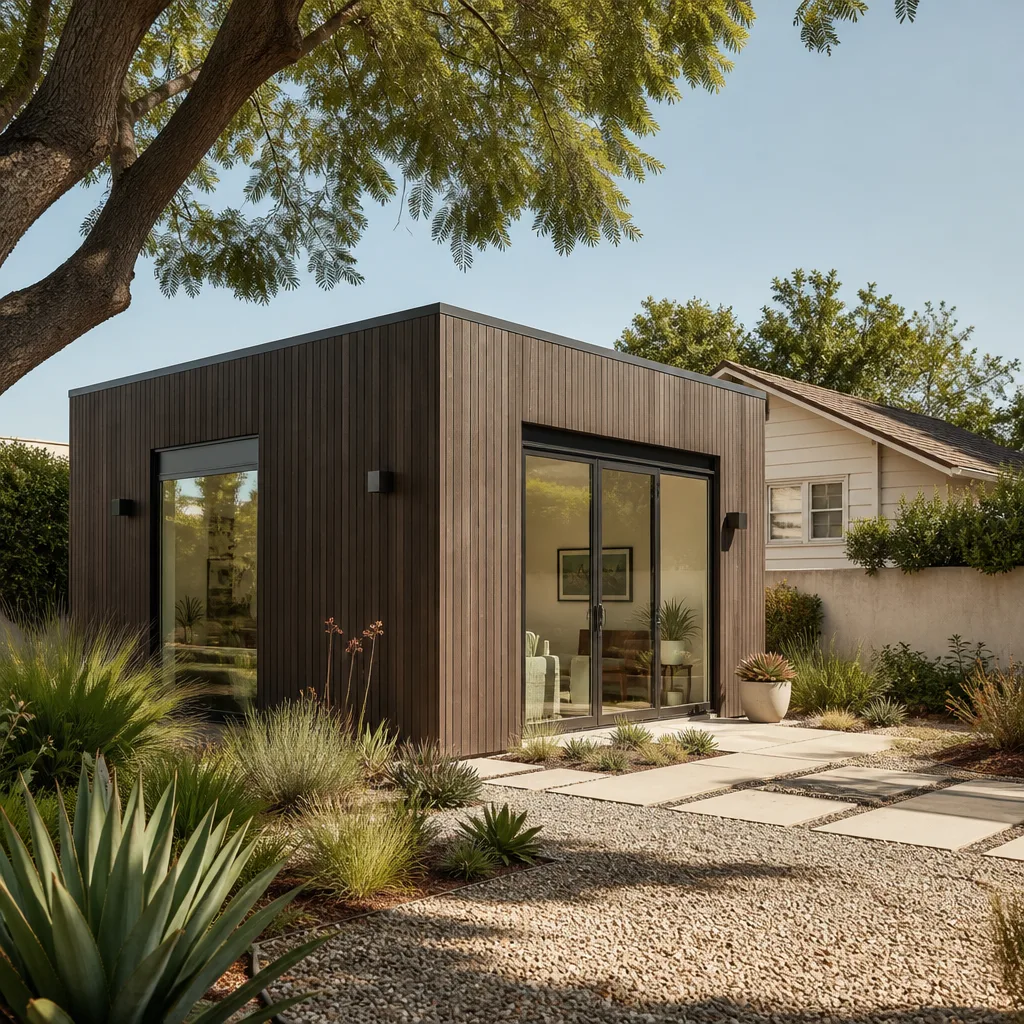
A Junior ADU is not a full second home. It’s a smaller accessory dwelling unit, typically under 500 square feet, built from an existing conditioned space like a garage bay, a workshop, or a covered patio that was enclosed years ago. In Austin, these conversions almost always involve James Hardie siding and trim because the product holds up to the heat and the occasional hailstorm better than wood or vinyl. When the conversion fails, it’s rarely the James Hardie material itself. It’s almost always the connection points: where the siding meets the slab, where the roof ties into the existing house, or where the original framing was never brought up to the standard the Hardie product demands.
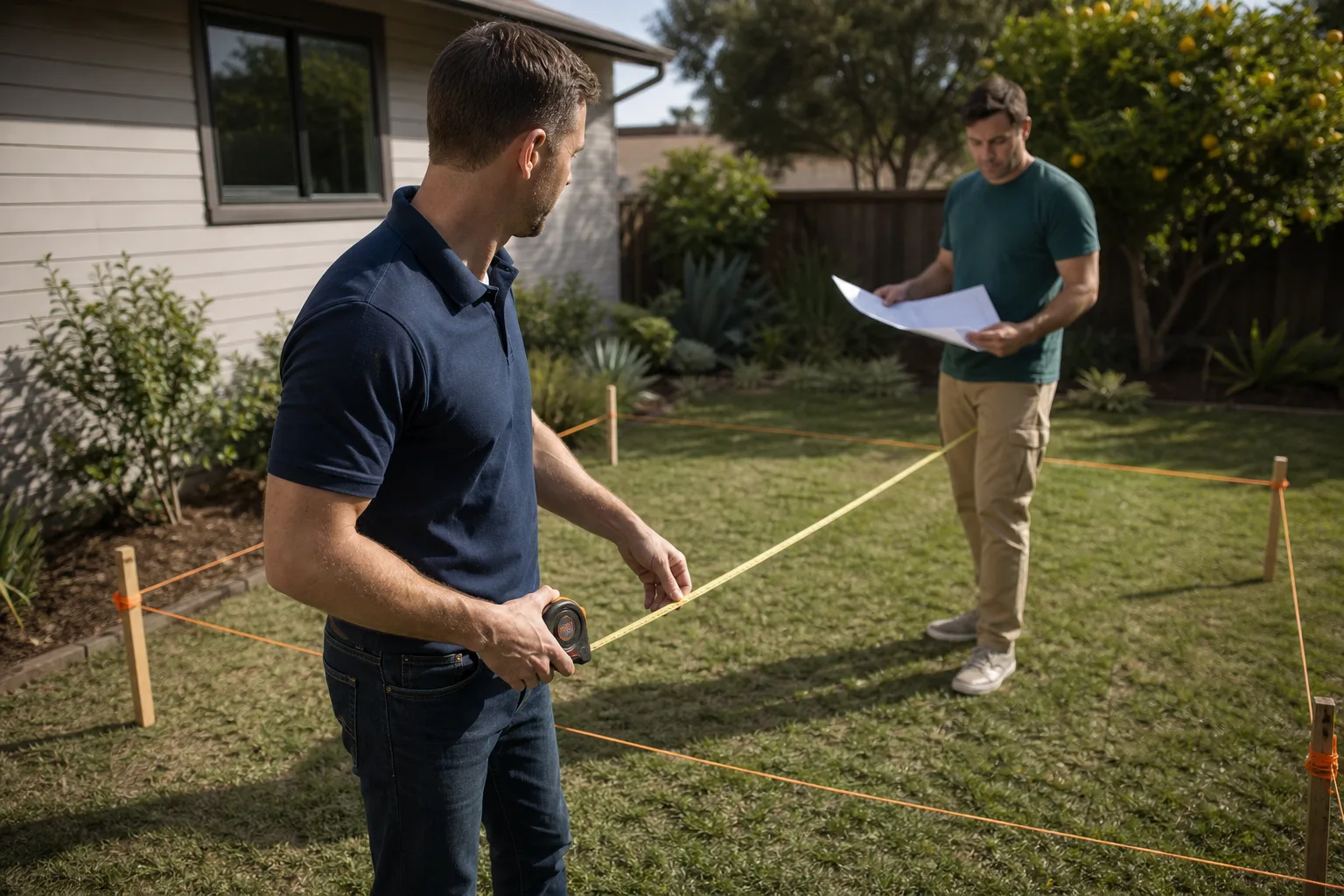
When you call Seedling ADU Austin, we start by looking at what you actually have: the condition of the existing slab, the roof tie-in, the electrical service, and whether the original conversion was ever permitted. Some Junior ADUs are straightforward finishes. Some need structural correction before we can safely hang new Hardie board. We tell you which one you have before we quote a dollar amount.
Which James Hardie Models This Applies To
This work covers Junior ADU conversions finished with any James Hardie plank, panel, or trim product that is still in production or was installed within the last 15 years. The most common products we see on Austin Junior ADUs are HardiePlank lap siding in 5/4 x 8.25 and 5/4 x 6, HardiePanel vertical siding, and HardieTrim boards in 5/4 and 4/4 thicknesses. If your conversion was built before roughly 2010, you may also have the older HardieSoffit or discontinued HardieShingle profiles, which we can still match with current-production equivalents.
Here is the compatibility detail most pages skip: James Hardie siding uses a specific nail pattern and gap schedule, and it does not go directly against the stud. It requires a weather-resistive barrier, a drainage plane, and flashing at every penetration. When a Junior ADU conversion fails in Austin, in our experience it is usually because someone skipped one of those steps on the original build, not because the Hardie product failed. The board itself is cement, sand, and cellulose fiber. It does not rot. What rots is the framing behind it when water gets in through an unflashed seam.
For the OEM-versus-aftermarket question: for trim, corners, and flashing we use Hardie-brand components whenever they are available because the dimensional match is exact. For framing, fasteners, and weather barrier we use trade-grade materials that meet or exceed the Hardie installation requirements. You do not need a Hardie-brand nail, but you do need the right nail type: hot-dipped galvanized or stainless. A drywall screw or an electroplated nail will rust inside a year and stain the plank face. That is the kind of thing that shows up on Austin Junior ADUs built during the early 2020s ADU boom.
Seedling ADU Austin is an independent service provider. We are not affiliated with James Hardie. We work with their materials every week because they are the right product for this climate, not because anyone told us to.
Signs Your James Hardie Junior ADU Conversion Is Failing
- Dark staining or soft spots at the bottom of the siding. This usually means the original builder set the bottom course too close to grade or skipped the starter flashing. In Austin’s clay soil, slabs move, and a clearance that was fine in year one can be buried by year five. The Hardie board wicks moisture up from the bottom edge, and the stain never dries out.
- Gaps opening between siding boards or at inside corners. Hardie plank is a dimensionally stable product, but the framing behind it is not. Austin’s summer-to-winter humidity swing moves wood framing enough to open seams if the original installer nailed too close to the board ends or did not leave the specified 1/8-inch expansion gap.
- Doors or windows that stick only during wet weeks. This is almost never the door itself. It is water getting into the rough opening because the flashing was under-driven or missing entirely. The framing swells, the opening goes out of square, and suddenly the door only latches when you lean on it.
- Cracked or crumbling caulk at joints and trim lines. Caulk is a maintenance item in this climate, not a one-time install. Austin’s UV exposure breaks down exterior caulk in three to five years. If the caulk has failed and the original flashing behind it was marginal, water has been getting in for a while. What you are seeing at the surface is the last warning.
- Pest activity, especially ants or termites, near any part of the ADU envelope. Water-damaged framing attracts insects. Ant trails along the base of a Hardie-clad wall are often the first visible sign of a moisture problem that hasn’t stained the siding yet. We see this more often on Austin Junior ADUs built over older garage slabs without a proper termite barrier.
Replacement Cost & What’s Included
In Austin, a Junior ADU conversion repair or re-siding job typically runs between $7,500 and $24,000. The wide range comes down to three things: how much of the existing envelope has to come off, whether the framing needs correction before new material goes on, and whether the original work was permitted. A straightforward re-side over sound framing starts near the bottom of that range. A failed original conversion that requires opening walls, correcting flashing, re-framing an opening, and re-siding is closer to the top.
| Scope | Typical Austin Range |
|---|---|
| Assessment, flashing correction, isolated Hardie board replacement | $1,800 – $4,500 |
| Partial re-side (one elevation or one wall section) with new weather barrier | $5,000 – $11,000 |
| Full Junior ADU re-side with flashing, corners, and trim | $12,000 – $19,000 |
| Full re-side plus framing correction or structural repair | $18,000 – $32,000 |
| Complete Junior ADU conversion of an existing unfinished space | $14,500 – $38,000 |
Every Seedling ADU Austin estimate is written before any work starts. It includes the materials, the labor, the flashing, the weather barrier, the fasteners, the disposal, and the cleanup. If we find something behind the wall that changes the scope, we stop, we show you, and we re-quote in writing before we keep going. There are no line items added after the crew arrives and no suggestions of “we’ll sort it out at the end.” Every job is covered by our 365-Day Done Right Promise: if something is not done right, we come back and make it right.
DIY or Call Us?
There are things you can check yourself, safely. Walk the perimeter of your Junior ADU after the next big rain. Look at the bottom edge of the siding. Look at the corners. Look at the flashing above every door and window. If water is sheeting off the roof and running down the wall face instead of into a gutter or away from the building, you have found your likely problem, and fixing that might be as simple as a gutter adjustment or a regraded planting bed.
What we would not recommend is removing Hardie board yourself to see what is behind it. The boards are heavy, they break when pried, and once you open the wall, you are now responsible for the weather barrier, the flashing, and the reinstall. The failure points on these conversions are usually hidden, and the fix requires opening enough of the assembly to see what the original builder did, not just what the surface shows. If you are unsure whether what you are looking at is cosmetic or structural, call us at (254) 615-3842. We will tell you straight what we think, and if it does not need our crew, we will say that too.
FAQs
A properly detailed Hardie-clad ADU in Austin should last 30 to 50 years before the siding needs full replacement, but the caulk, flashing, and weather barrier are maintenance items with shorter lives. We typically say the siding itself will outlast the original builder’s caulk job by decades. The conversion fails when the water management layer fails, not when the Hardie board wears out.
Often, yes, if we catch the problem before water has been getting into the framing for multiple seasons. Isolated flashing correction and spot board replacement can run under $4,500 and buy you years. But if the framing is already soft or the original conversion was never properly flashed, you are spending money on a patch that will fail again in a different spot. Call (254) 615-3842 and we will give you an honest read on which situation you are in.
A partial re-side is typically a one- to two-week job. A full conversion of an unfinished garage or workshop into a finished Junior ADU takes four to eight weeks depending on scope, electrical, plumbing, and whether the slab needs work. We schedule around your household, and we keep the worksite clean at the end of each day. On the longer jobs, we will give you a milestone schedule at the start so you know exactly what is happening in week three, not just week one.
We keep the most common HardiePlank profiles, HardieTrim boards, flashing, and fasteners on our trucks in the Austin area so that most partial repairs can get started same-visit after the initial assessment. For full conversions and full re-sides, we order the exact product list from our local James Hardie supplier typically two to three days before the crew is scheduled to arrive. We also work with Abodu, Cover, and Dvele prefab components when those are part of the larger ADU plan.
Let’s look at what the space actually needs before we talk about what it could become. If your Junior ADU is showing signs of trouble, call (254) 615-3842 and we will schedule a walkthrough. Ben Ortega will go through the estimate with you line by line before you commit to anything, and the number we quote is the number you will see on the final invoice.
Call (254) 615-3842 for your free estimate, or reach out and tell us what is going on with your ADU. We serve Austin and the surrounding neighborhoods, and someone will answer the phone whenever you call.
Written by Ben Ortega, Owner, Seedling ADU Austin at Seedling ADU Austin, serving Austin and nearby areas.